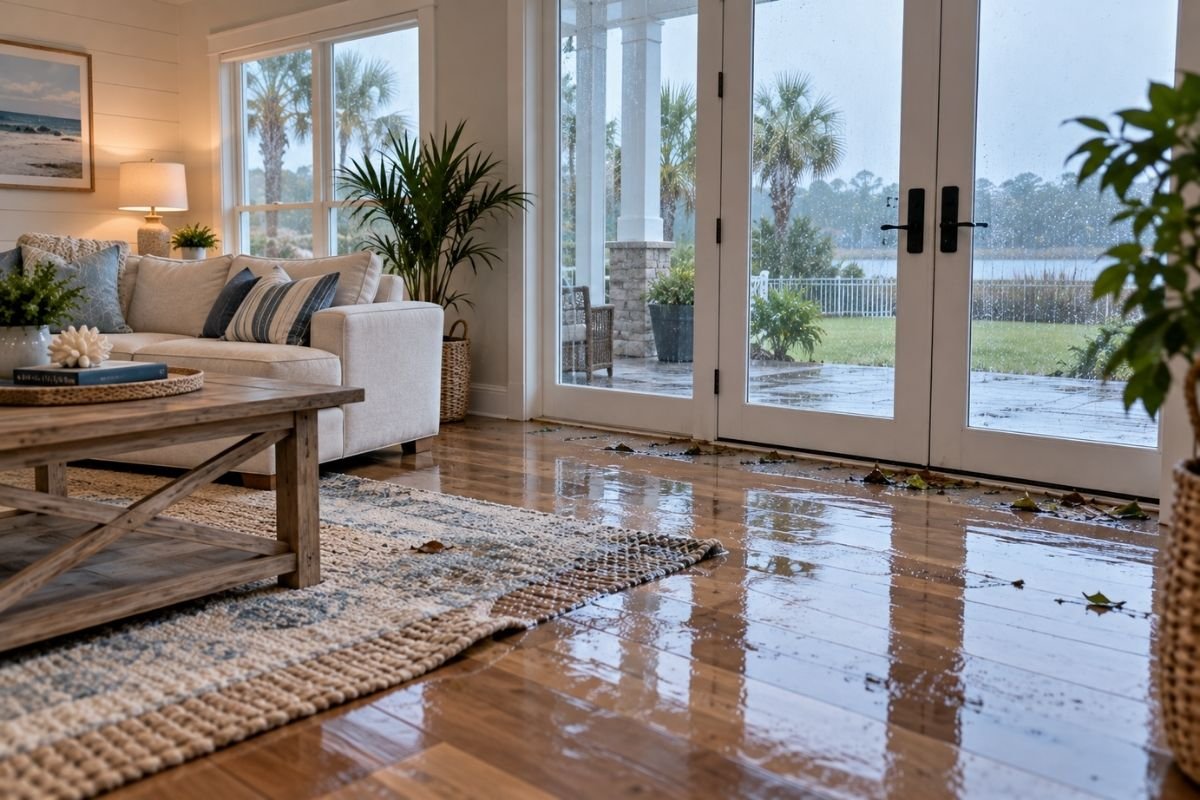
Moisture is one of the biggest threats to homes in coastal areas like Wilmington, NC. While water is essential for life, when it sneaks into your home where it doesn’t belong, it can create serious issues — from musty smells and damp patches to hidden mold growth and even structural damage.
Understanding how to diagnose moisture problems early and take steps to solve them can save you time, money, and stress. Here’s what homeowners in Wilmington, Hampstead, and Surf City need to know.
Why Moisture Problems Happen
Moisture can come from a variety of sources. Some are obvious, like a leaking pipe or a flooded basement. Others are harder to notice, such as air infiltration through poorly sealed windows or hidden condensation inside walls.
Common causes include:
-
Roof leaks that allow rain to enter attic spaces.
-
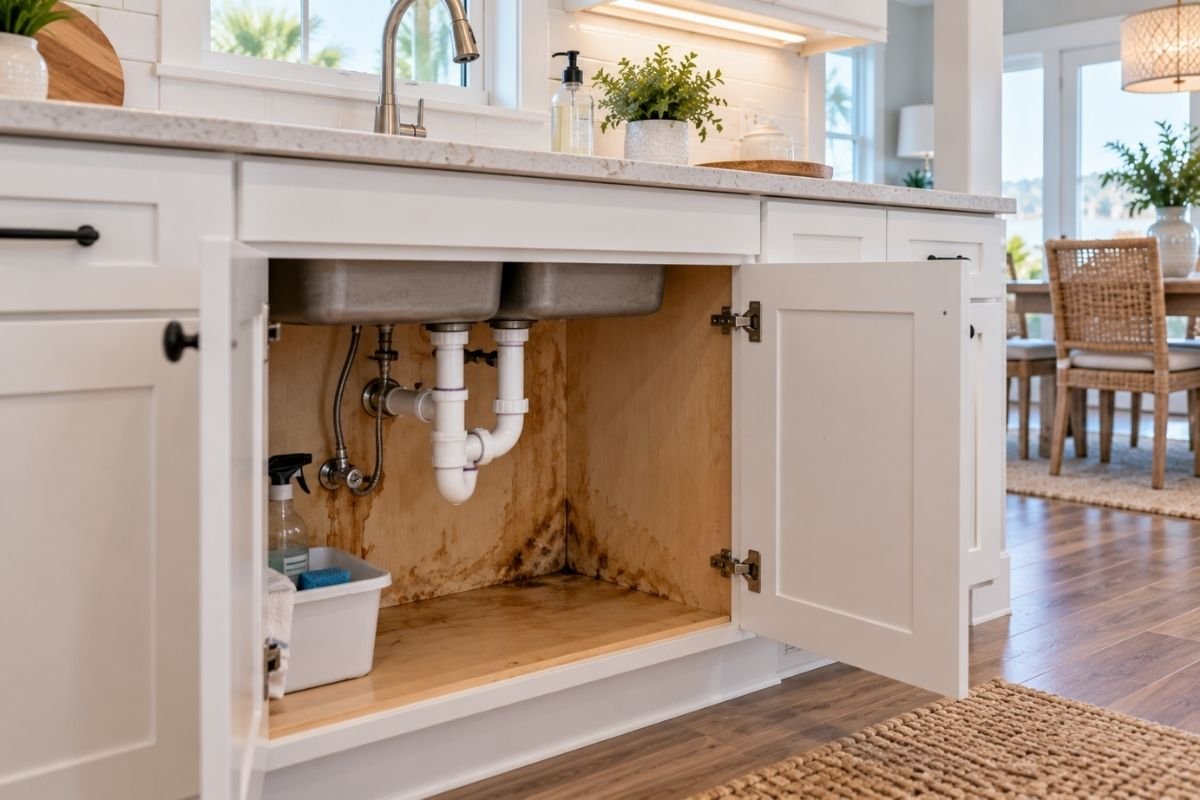
Plumbing leaks behind walls or under sinks.
-
Air infiltration that lets humid coastal air inside.
-
Poor ventilation in bathrooms, kitchens, or crawl spaces.
-
High humidity levels, which are common in Wilmington’s coastal climate.
Signs of Moisture Problems
Catching moisture issues early is key. Look for these warning signs:
-
Musty or damp smell that lingers in certain rooms.
-
Mold patches on walls, ceilings, or around windows.
-
Peeling paint or bubbling wallpaper caused by trapped moisture.
-
Condensation on windows or cold surfaces.
-
Warped wood or soft drywall, often hidden until damage is severe.
If you notice these symptoms, it’s time to take action before the problem worsens.
Tools for Diagnosing Moisture
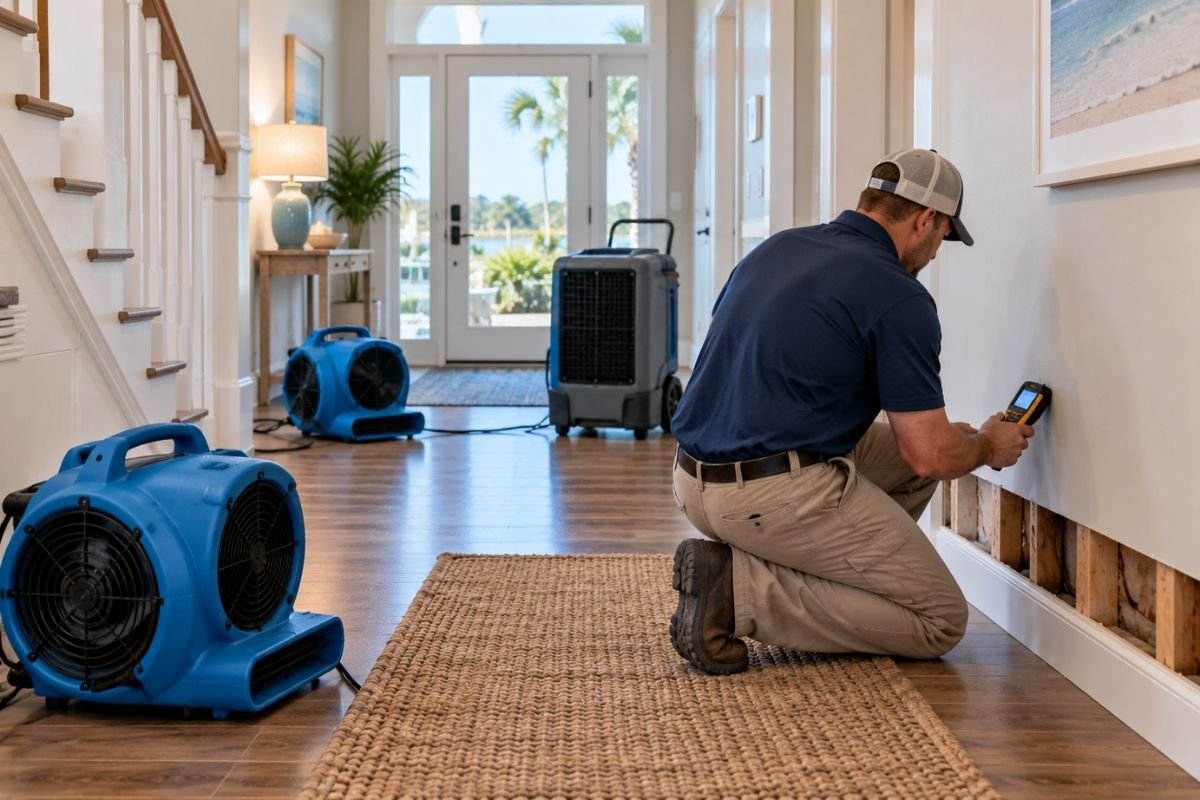
Professional inspectors use advanced tools to identify moisture issues:
-
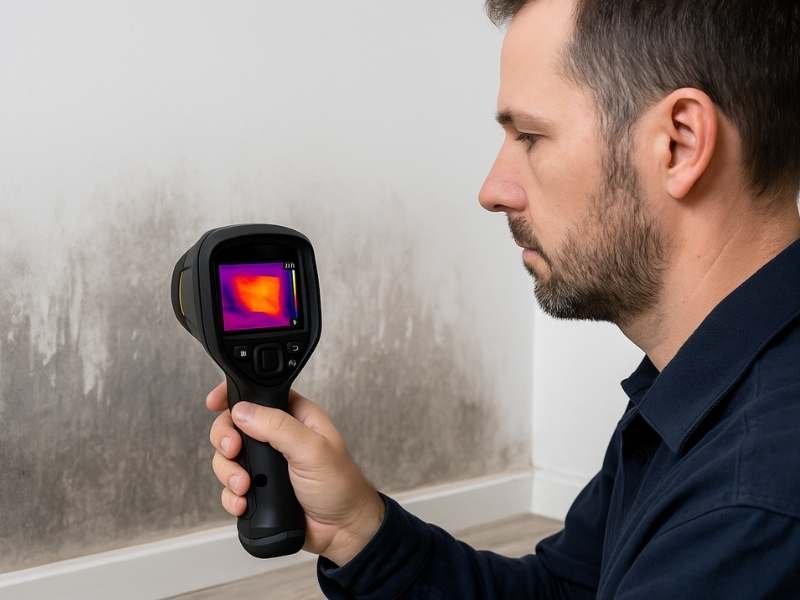
Thermal Cameras: Detect cooler areas that indicate hidden water.
-
Infrared Imaging: Pinpoints leaks or damp spots behind walls.
-
Moisture Meters: Measure exact moisture levels in building materials.
These tools provide more accurate results than relying on sight or smell alone, allowing for quicker solutions.
How to Solve Moisture Problems
Once the source is identified, the next step is fixing it properly. Solutions may include:
-
Fixing Leaks – Repairing damaged roofs, pipes, or windows.
-
Improving Ventilation – Installing fans or dehumidifiers in problem areas.
-
Sealing Air Leaks – Preventing humid outdoor air from entering.
-
Mold Cleaning and Remediation – If mold has already grown, professional mold remediation ensures it is removed safely.
-
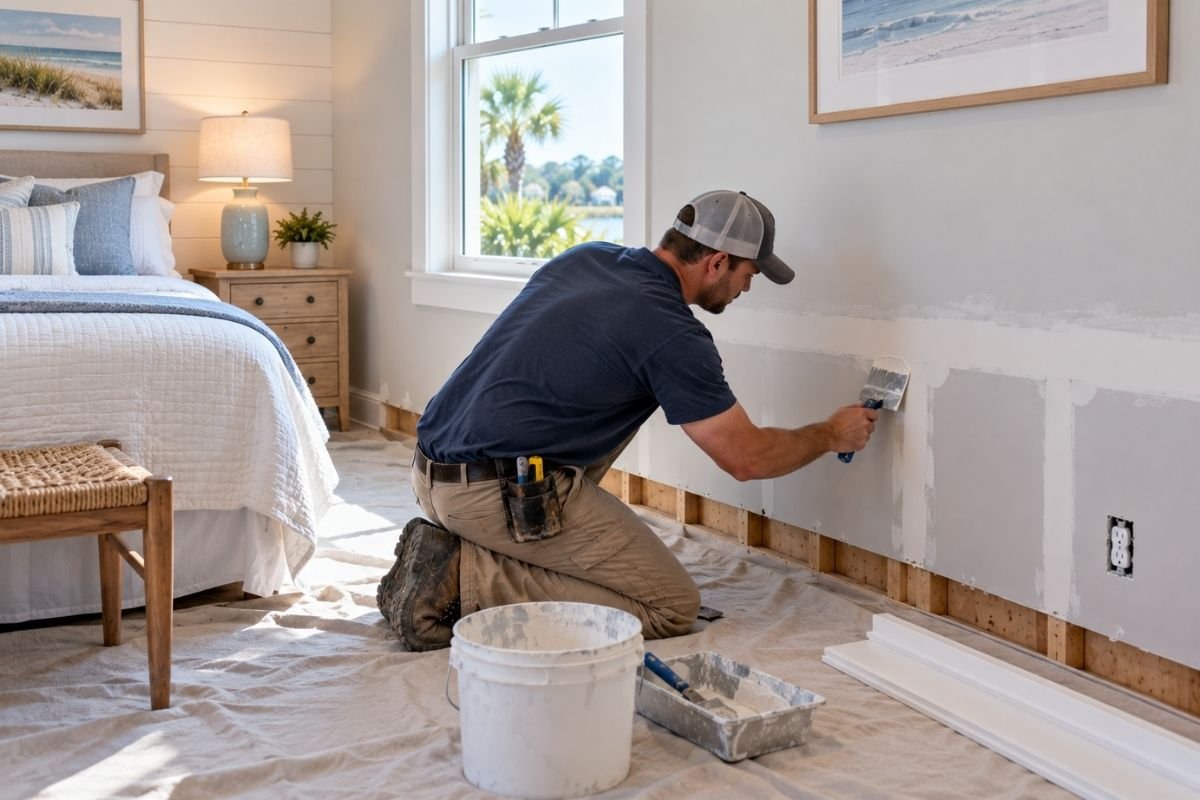
Home Repairs – Replacing water-damaged drywall, flooring, or insulation.
The key is not just cleaning visible damage but addressing the root cause of the moisture problem.
Why DIY Isn’t Always Enough
While homeowners can fix minor leaks or run a dehumidifier, serious moisture issues often require professional help. A handyman might patch up small repairs, but when it comes to hidden leaks, mold inspection, or structural damage, it’s best to work with a company that specializes in diagnosing and solving these problems.
This ensures the moisture issue doesn’t keep coming back.
Moisture Problems in Coastal North Carolina
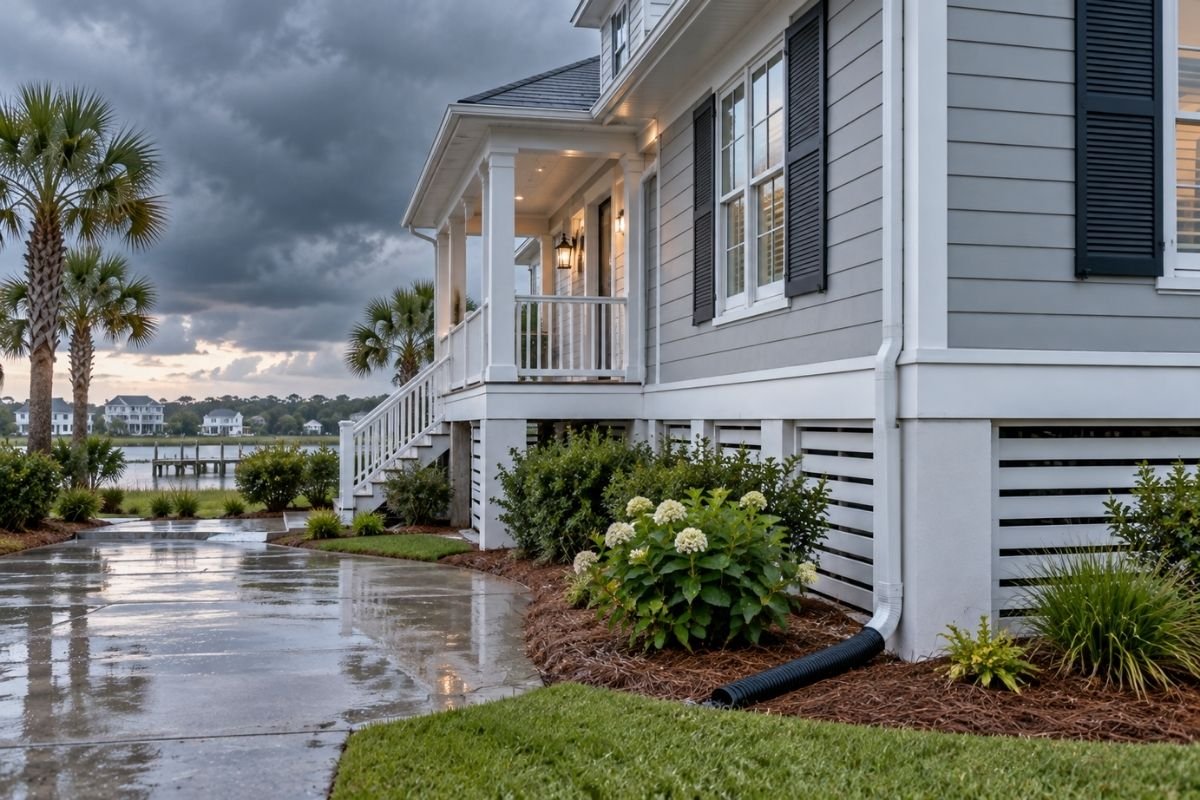
Homes in Wilmington, Hampstead, and Surf City face unique challenges. Coastal storms, heavy rains, and high humidity all make moisture issues more common. That’s why regular inspections and proactive maintenance are so important for protecting your investment.
Final Thoughts
Moisture problems may start small, but if left untreated, they can quickly become a serious risk to your home and health. From musty smells and air infiltration to hidden leaks, catching problems early is the key to prevention.
By combining professional tools like thermal cameras and infrared imaging with smart repairs and mold remediation, Wilmington homeowners can keep their homes safe, dry, and comfortable year-round.