Your home’s walls play an important role in its appearance and comfort. However, cracks, holes, stains, and other damage can quickly make your interior look worn. Fortunately, professional drywall repair in Hampstead, NC, can restore your walls and improve your home’s overall appearance.
Coastal homeowners face unique challenges. For example, high humidity, seasonal storms, and occasional plumbing leaks can damage interior walls. Additionally, everyday activities can cause dents, scratches, and holes.
Atlantic Coastal Solutions helps homeowners address property damage and maintain attractive living spaces. Whether you need minor wall repairs or extensive drywall restoration, choosing the right solution makes a difference.
Common Drywall Problems in Hampstead, NC
Drywall damage can develop for several reasons. While some problems only affect appearance, others may indicate moisture or structural concerns. Therefore, identifying the cause helps you choose the right repair method.
1. Small Holes and Surface Dents
Everyday activities often leave small holes and dents in drywall. For example, moving furniture, opening doors, or removing wall decorations can damage the surface.
Fortunately, professionals can repair many small imperfections without replacing an entire wall. They typically apply patching materials, smooth the surface, and prepare it for painting.
However, larger holes may require additional support and new drywall sections.
2. Cracks in Walls and Ceilings
Drywall cracks often appear near doors, windows, and ceiling joints. In many cases, normal building movement causes these imperfections.
However, recurring cracks may indicate deeper problems. Therefore, professionals should examine the affected area before applying repairs.
A proper repair may involve reinforcing joints, applying compound, and smoothing the surface. As a result, the repaired area blends more naturally with the surrounding wall.
3. Nail Pops and Loose Fasteners
Nail pops create small bumps or circular cracks beneath painted surfaces. These problems often develop when framing materials move.
To correct the issue, repair professionals secure the drywall and address the loose fasteners. Next, they apply joint compound and smooth the affected area.
Finally, primer and paint help restore a consistent finish.
4. Water-Damaged Drywall
Water damage can create stains, bubbling paint, swollen surfaces, and soft drywall. Unfortunately, covering these symptoms with fresh paint rarely solves the underlying problem.
Instead, homeowners should identify and correct the moisture source first.
For example, a leaking pipe may continue damaging the wall even after a cosmetic repair. Therefore, early investigation can help prevent additional deterioration.
Why Coastal Humidity Affects Drywall in Hampstead
Hampstead’s coastal environment creates conditions that can affect interior building materials. In particular, high humidity and seasonal storms can increase moisture-related risks.
Drywall contains gypsum and paper-facing materials. Consequently, prolonged moisture exposure may weaken the material and damage its appearance.
Additionally, damp paper surfaces can support mold growth under suitable conditions.
However, homeowners can reduce these risks through proper ventilation and regular maintenance.
Consider these preventive measures:
- Maintain appropriate indoor humidity levels.
- Repair plumbing leaks promptly.
- Improve ventilation in bathrooms and laundry rooms.
- Inspect windows and exterior walls for leaks.
- Address roof damage before moisture reaches interior surfaces.
These simple steps can help protect your walls. Furthermore, they may reduce the need for extensive repairs.
How Professional Drywall Repair Works
Professional drywall repair involves several important steps. Each stage helps restore the wall’s appearance and stability.
Step 1: Inspect the Damaged Area
First, repair professionals examine the affected surface. They identify visible damage and look for possible underlying problems.
For example, a small impact hole requires a different solution than extensive moisture damage.
Therefore, a careful inspection helps determine the most appropriate repair approach.
Step 2: Prepare the Surface
Next, the repair team removes loose material and prepares the surrounding area.
They may also trim damaged edges or remove unstable drywall sections.
Additionally, they protect nearby floors and furniture from dust.
Proper preparation creates a better foundation for the remaining work.
Step 3: Repair Holes and Cracks
After preparing the surface, professionals repair the damaged sections.
Small holes may require patching compound. However, larger openings often need drywall patches and backing support.
For cracks, professionals may apply joint tape and reinforcing materials.
As a result, the repair provides a more stable surface for finishing.
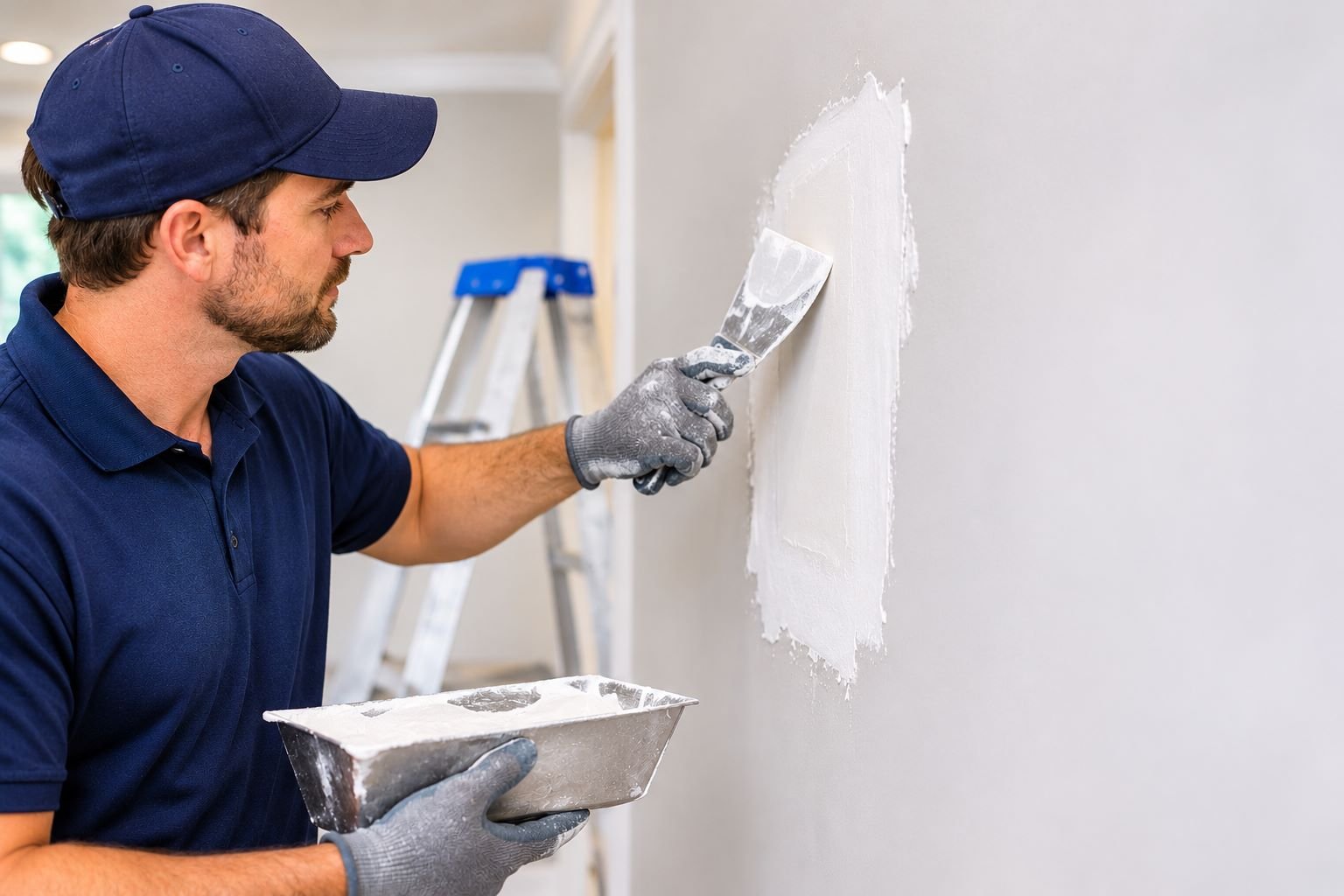
Step 4: Apply Joint Compound
Next, the repair team applies joint compound to smooth the repaired area.
They typically use several thin layers rather than one thick application.
This approach helps create a gradual transition between the patch and surrounding wall.
Furthermore, allowing each layer to dry properly improves the finishing process.
Step 5: Sand and Match the Texture
Once the compound dries, professionals sand the surface.
They also work to match the existing wall texture.
For example, some homes feature smooth walls, while others have orange-peel or knockdown finishes.
Matching the texture helps the repair blend with the surrounding surface.
Step 6: Prime and Paint
Finally, the repair team applies primer and paint.
Primer helps seal the repaired surface and supports a more consistent finish.
However, older paint may have faded over time. Therefore, painting a larger section sometimes produces better visual results.
When Should You Replace Damaged Drywall?
Not every drywall problem requires complete replacement. In fact, professionals can repair many small holes, dents, and surface cracks.
However, some conditions call for new drywall.
Consider replacement when:
- Water exposure has severely weakened the material.
- Large sections have become soft or swollen.
- Contaminated water has affected the drywall.
- Extensive damage makes patching impractical.
- Repeated repairs no longer provide a stable surface.
Additionally, widespread moisture damage may require further investigation.
A professional assessment helps determine whether repair or replacement offers the better long-term solution.
Why You Should Fix Moisture Problems Before Drywall Repairs
Moisture can cause serious problems when homeowners ignore its source.
For example, imagine repairing a ceiling stain without fixing the leaking pipe above it. Although the ceiling may look better initially, the stain could return.
Furthermore, trapped moisture can continue damaging surrounding materials.
Therefore, identifying the source should come before cosmetic restoration.
Atlantic Coastal Solutions offers property maintenance and repair services that help homeowners address various household problems.
For additional information, explore our handyman services in Wilmington, NC.
By addressing the underlying problem first, homeowners can make more informed repair decisions.
Drywall Repair vs. Complete Wall Replacement
Homeowners often wonder whether they should repair damaged drywall or replace it completely.
Fortunately, the decision usually depends on the extent of the damage.
When Drywall Repair Makes Sense
Drywall repair often works well for:
- Small holes from everyday accidents.
- Minor surface dents and scratches.
- Stable cracks around joints.
- Limited cosmetic imperfections.
- Isolated damage with sound surrounding material.
In these situations, professional patching can restore the surface without unnecessary demolition.
When Replacement Makes More Sense
Replacement may offer a better solution for extensive deterioration.
For example, severe water exposure can weaken large drywall sections. Additionally, contaminated materials may require removal.
Therefore, professionals should evaluate the condition before recommending repairs.
Choosing the appropriate method helps homeowners avoid unnecessary expenses while maintaining safe, functional interiors.
How to Maintain Your Walls After Drywall Repair
Proper maintenance helps preserve your newly repaired walls. Moreover, preventive care can reduce future damage.
Control Indoor Humidity
First, maintain appropriate humidity levels throughout your home.
Use bathroom exhaust fans and improve ventilation where necessary.
Additionally, address condensation problems before they affect surrounding materials.
Repair Leaks Quickly
Even small leaks can cause damage over time.
Therefore, inspect plumbing fixtures, windows, and roofing whenever you notice moisture.
Prompt repairs help protect drywall and nearby building materials.
Prevent Everyday Impact Damage
Furniture and doors frequently cause wall damage.
Fortunately, simple precautions can help.
For example, install doorstops and use care when moving heavy furniture.
Monitor Recurring Cracks
Some cracks develop from normal building movement.
However, widening or recurring cracks may require further investigation.
Consequently, homeowners should monitor changes rather than repeatedly covering the same problem.
Schedule Regular Home Maintenance
Finally, routine inspections can reveal small problems before they become expensive repairs.
Checking vulnerable areas helps homeowners maintain attractive and functional interiors.
Benefits of Professional Drywall Repair in Hampstead, NC
Professional drywall repair offers several advantages beyond improving appearance.
Improved interior appearance: Smooth walls create a cleaner and more attractive living environment.
Appropriate repair methods: Experienced professionals can select suitable materials and techniques for different types of damage.
Better finishing results: Proper sanding, texture matching, priming, and painting help repairs blend with existing surfaces.
Early problem identification: A careful assessment may reveal moisture issues or recurring damage that needs additional attention.
Long-term property maintenance: Timely repairs help homeowners preserve interior finishes and prevent minor problems from worsening.
Overall, professional repairs support a more comfortable and well-maintained home.
Why Choose Atlantic Coastal Solutions?
Homeowners need reliable solutions when drywall damage affects their property.
Atlantic Coastal Solutions supports property maintenance and home improvement needs throughout Hampstead and nearby coastal North Carolina communities.
Our approach emphasizes careful assessments, practical repair recommendations, and attention to finishing details.
Additionally, we understand the importance of addressing moisture concerns before restoring damaged surfaces.
Whether you need help with wall damage, ceiling repairs, or general home maintenance, our team can discuss your property’s needs.
Frequently Asked Questions About Drywall Repair in Hampstead, NC
Can professionals repair drywall without replacing the entire wall?
Yes. Professionals can repair many small holes, dents, and cracks. However, extensive damage may require partial or complete replacement.
How long does drywall repair take?
Small repairs may require limited active work. However, drying time, sanding, priming, and painting can extend the project timeline. Larger repairs may take longer.
Can water-damaged drywall be repaired?
Sometimes. The answer depends on the extent of moisture exposure and the material’s condition. Severely damaged or contaminated drywall may require replacement.
Why do drywall cracks keep returning?
Building movement, moisture changes, and poorly reinforced joints can cause recurring cracks. Therefore, identifying the underlying cause helps improve repair results.
Should I prime drywall patches before painting?
Yes. Primer helps seal joint compound and supports a more uniform paint finish. As a result, the repaired section blends more naturally with the surrounding wall.
Restore Your Walls with Professional Drywall Repair in Hampstead, NC
Damaged drywall can affect your home’s appearance and comfort. Fortunately, the right repair approach can restore your walls and improve your interior spaces.
Whether you notice cracks, holes, water stains, or damaged ceiling sections, early attention can prevent minor problems from becoming larger concerns.
Atlantic Coastal Solutions helps homeowners in Hampstead, NC, and surrounding coastal communities address property maintenance and repair needs.
Ready to improve your home’s interior? Contact Atlantic Coastal Solutions today to discuss your drywall repair needs and learn more about available services.