A door that no longer closes smoothly. Baseboards that have separated from the wall. An awkward corner that could become useful storage. These may seem like unrelated household problems, but they often have one thing in common: skilled carpentry can provide a practical solution.
For homeowners searching for carpentry services in Hampstead NC, professional woodwork can improve much more than a home’s appearance. Thoughtful carpentry helps restore damaged features, improve everyday functionality, and create details that make a property feel complete.
Whether you own a traditional coastal cottage, a newer family home, or a vacation property near the North Carolina coast, your carpentry needs will depend on the condition and character of your space.
Rather than focusing on one particular renovation, this guide examines the problems homeowners encounter, the craftsmanship behind effective solutions, and the decisions that help make carpentry projects successful.
When Small Home Problems Call for Skilled Carpentry
Many carpentry projects begin with something homeowners notice during ordinary daily activities.
For example, a bedroom door might scrape against the frame. A section of trim may come loose during cleaning. Alternatively, a hallway might lack convenient storage.
Although these issues appear different, each requires an understanding of materials, measurements, and installation methods.
The Door That Never Fits Quite Right
Interior doors can develop alignment problems over time.
For instance, a door may rub against the jamb or fail to latch properly.
However, the cause isn’t always the door itself.
Loose hinges, changes in the surrounding framing, or hardware problems can affect operation.
Therefore, a carpenter should identify the cause before recommending adjustments or replacement.
A properly completed repair can restore smoother operation while maintaining the door’s appearance.
The Trim That Makes a Room Look Unfinished
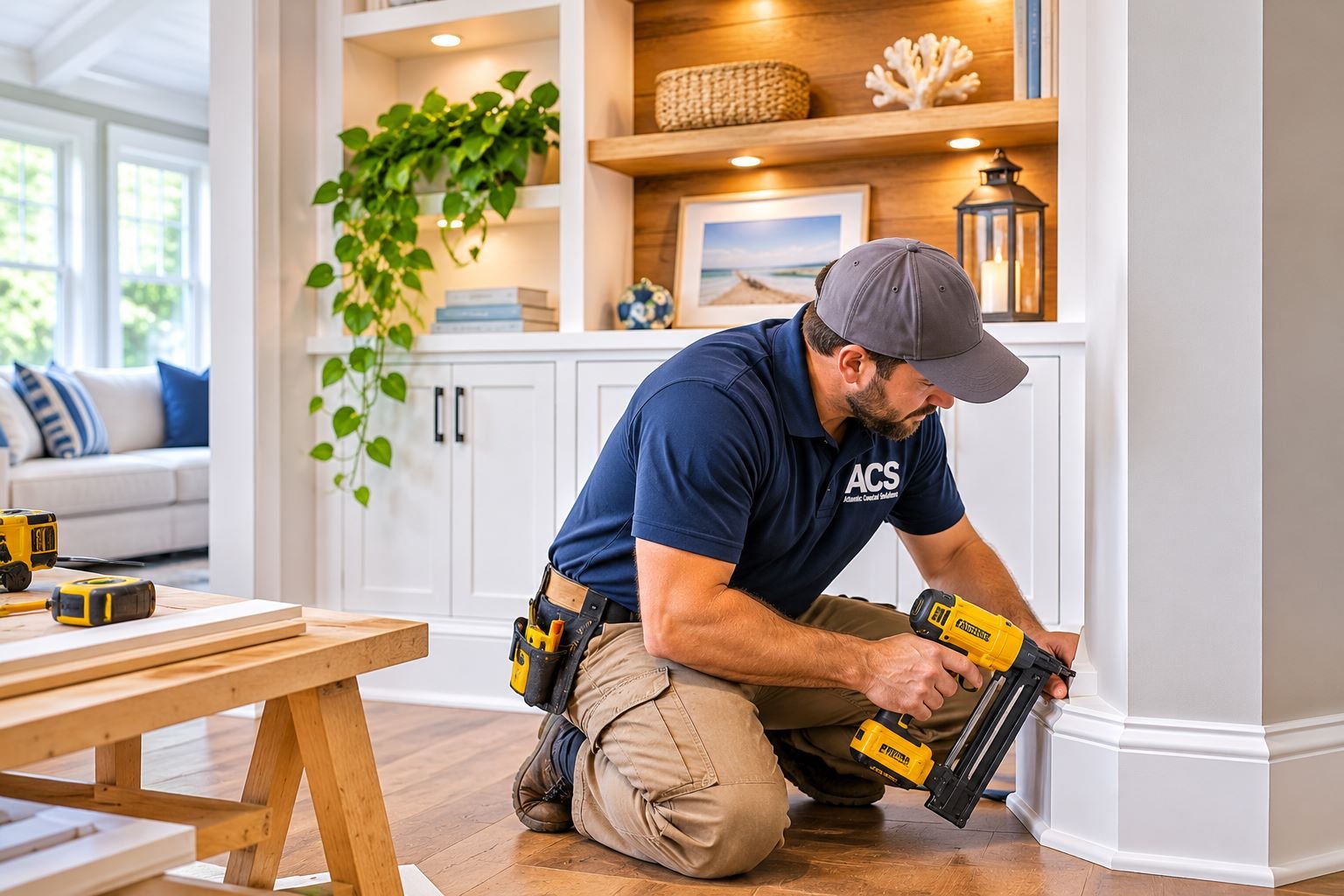
Baseboards, door casings, and window trim create visual transitions between surfaces.
However, damaged or poorly fitted trim can make an otherwise attractive room appear incomplete.
For example, gaps around a doorway may become especially noticeable after repainting.
Careful measuring, accurate cuts, and appropriate fastening can help create cleaner results.
Additionally, suitable finishing work can improve the transition between new and existing materials.
The Space That Doesn’t Work for Your Family
Some homes contain corners, alcoves, or wall areas that homeowners struggle to use effectively.
Custom carpentry can help transform these spaces.
For example, a narrow hallway may accommodate a carefully designed storage bench.
Similarly, an unused wall might become a practical shelving area.
However, successful storage design should account for circulation, available dimensions, and safe attachment methods.
Custom Carpentry Is About Fit, Not Just Appearance
One advantage of custom woodwork is the ability to adapt a project to the property’s actual dimensions.
Unlike a standard ready-made product, a custom feature can accommodate specific measurements and design preferences.
Nevertheless, customization requires careful planning.
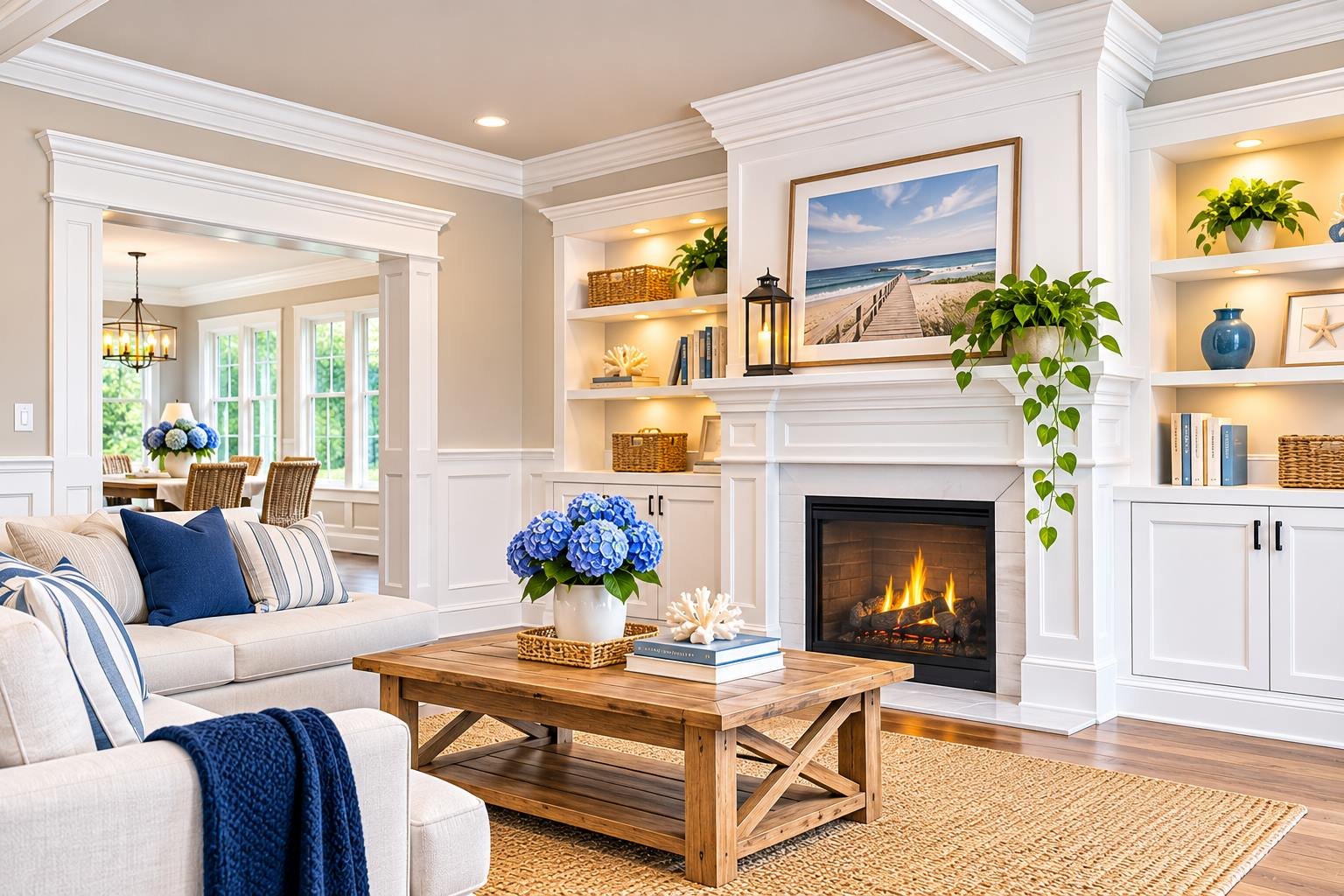
Consider a built-in cabinet designed for a living room.
At first glance, the project may appear straightforward. However, the installer must account for wall conditions, floor levels, nearby outlets, and the cabinet’s intended load.
Additionally, the finished feature should complement existing trim and architectural details.
Therefore, professional carpentry combines practical problem-solving with visual craftsmanship.
The goal isn’t simply to fill an empty space. Instead, it is to create something that functions naturally within the home.
Four Types of Carpentry Work Hampstead Homeowners Commonly Consider
Carpentry covers a broad range of residential improvements.
Understanding the different applications can help homeowners identify the work their property needs.
Interior Finish Carpentry
Finish carpentry focuses on visible architectural details.
Examples include baseboards, crown molding, door casings, window trim, and decorative wall features.
These elements can create a more polished appearance when installed carefully.
For instance, consistent trim profiles can help connect rooms with different finishes.
Furthermore, well-planned transitions can make renovations feel more cohesive.
Custom Storage and Built-Ins
Custom storage projects address specific organizational needs.
Possible improvements include:
- Built-in bookshelves
- Window seats with storage
- Mudroom benches
- Closet shelving
- Entryway organizers
- Custom utility cabinets
However, the appropriate design depends on the available space and intended use.
For example, heavy shelving requires suitable materials and secure structural attachment.
Repair and Replacement Carpentry
Existing wooden features sometimes need repair rather than complete replacement.
A carpenter may evaluate damaged trim, doors, cabinets, or other suitable components.
However, the correct solution depends on the extent of deterioration.
For example, minor cosmetic damage may be repairable, while extensive decay may require replacement.
Additionally, underlying moisture problems should be addressed before installing new materials.
Exterior Carpentry
Exterior woodwork may include suitable trim repairs, porch components, decorative details, and other home improvements.
However, exterior projects require special consideration in coastal environments.
Materials must tolerate their expected exposure, and structural work must follow applicable requirements.
Consequently, homeowners should distinguish ordinary cosmetic carpentry from repairs that require structural evaluation.
A Closer Look at the Craftsmanship Behind a Finished Project
Two carpentry projects may look similar in photographs while differing considerably in workmanship.
The quality of the result often depends on decisions that homeowners cannot see after installation.
Accurate Measurements
Careful measurement is essential because existing homes are not always perfectly square or level.
For example, a wall may have slight irregularities that affect a long section of trim.
Therefore, the installer must evaluate actual site conditions rather than relying only on nominal dimensions.
Appropriate Material Selection
Different materials suit different applications.
For instance, an interior decorative molding may have different requirements from an exterior trim board.
Additionally, wood species, engineered products, and composite materials vary in their properties.
The correct selection depends on location, expected moisture exposure, finish, and manufacturer guidance.
Clean Joinery and Connections
Accurate joints help create a refined appearance.
However, appearance alone is not enough.
Connections must also suit the intended loads and construction conditions.
Therefore, fastening methods should reflect the specific project.
Surface Preparation
Even well-installed trim can look disappointing when the finishing process is rushed.
Appropriate preparation may involve filling suitable fastener holes, smoothing surfaces, and preparing joints for finishing.
However, some joints need movement accommodation rather than rigid filling.
Consequently, finishing methods should match the materials and installation conditions.
Three Home Improvement Projects That Show What Carpentry Can Accomplish
The following examples are illustrative project scenarios, not claims about completed customer jobs.
Project Example One: Refreshing a Dated Living Room
A homeowner wants to improve a living room without changing the floor plan.
The walls are in reasonable condition, but the existing trim looks inconsistent.
A possible carpentry plan includes replacing damaged baseboards, updating door casings, and adding a coordinated decorative feature.
As a result, the room can develop a more consistent architectural style.
However, the homeowner should choose trim dimensions that suit the room rather than selecting oversized profiles simply because they look impressive in photographs.
Project Example Two: Creating a Functional Entryway
A busy household needs a convenient place for shoes, bags, and everyday items.
Instead of adding several separate furniture pieces, the homeowner considers a custom entryway unit.
The design may include a bench, hooks, and enclosed storage.
However, the installer must account for available walking space and secure attachment.
Furthermore, materials should suit the wear and cleaning demands of a frequently used entrance.
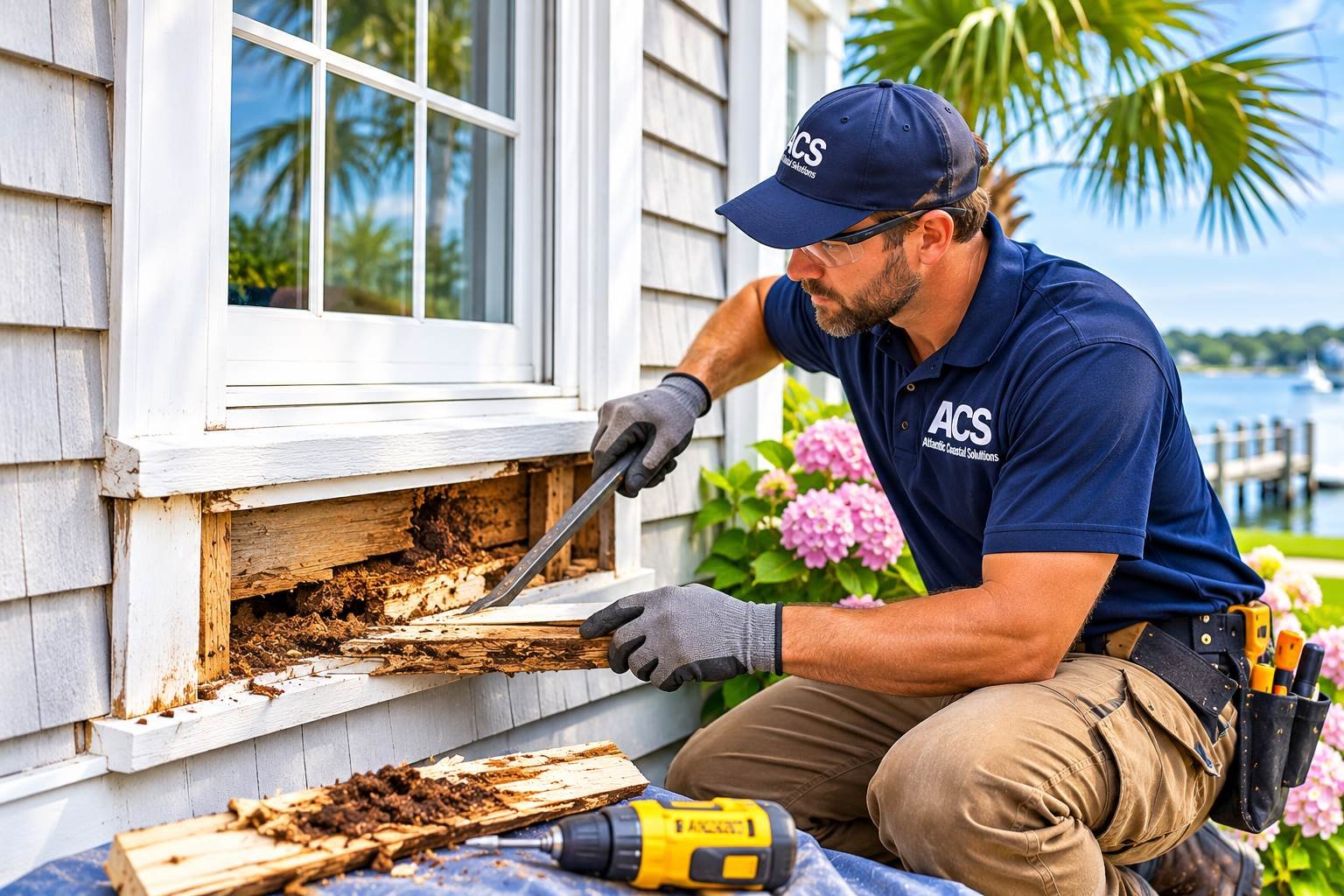
Project Example Three: Restoring Exterior Trim
A coastal homeowner notices deterioration around a section of exterior trim.
Rather than immediately replacing the visible board, the contractor first evaluates the surrounding conditions.
If moisture has entered behind the trim, additional work may be necessary.
Once the source of deterioration has been addressed, suitable replacement materials can be installed.
This approach helps avoid covering an unresolved problem with a new finish.
Why Coastal Conditions Matter for Carpentry in Hampstead
Hampstead’s proximity to the North Carolina coast makes material performance an important consideration.
Humidity, rainfall, sunlight, and salt-laden air can influence the condition of exterior components.
However, exposure varies from property to property.
A protected interior feature faces different conditions from trim installed on an exposed porch.
Moisture Movement
Wood can expand and contract as its moisture content changes.
Therefore, installers must consider appropriate acclimation, clearances, and fastening methods.
Additionally, persistent moisture problems can damage both wood and surrounding building materials.
Corrosion Resistance
Exterior hardware and fasteners may experience accelerated corrosion in coastal conditions.
Consequently, suitable corrosion-resistant components may be necessary.
However, material compatibility and manufacturer requirements should guide selection.
Protective Finishes
Paints and coatings can help protect suitable exterior materials.
Nevertheless, proper surface preparation and ongoing maintenance remain important.
A coating cannot reliably compensate for unresolved water intrusion or unsuitable construction details.
Ventilation and Drainage
Exterior woodwork should not trap water against vulnerable surfaces.
Therefore, appropriate flashing, drainage, and ventilation details may be essential.
For homeowners concerned about concealed moisture, Atlantic Coastal Solutions also provides information about thermal camera moisture detection.
Identifying the source of moisture before completing finish repairs can help prevent repeated deterioration.
Repair, Refinish, or Replace? Making the Right Decision
Not every damaged wooden feature requires complete replacement.
However, not every component can be repaired safely or economically.
Consider the following distinctions.
Repair may be appropriate when: Damage is limited, the material remains sound, and the underlying cause has been addressed.
Refinishing may be appropriate when: The component remains functional but its surface finish has deteriorated.
Replacement may be appropriate when: Damage is extensive, the component no longer performs correctly, or suitable repairs are impractical.
For example, a scratched cabinet door may need only suitable surface work.
In contrast, severely deteriorated exterior framing may require a more extensive assessment.
Structural damage deserves evaluation by appropriately qualified professionals.
Therefore, avoid choosing a repair method solely on the basis of appearance or initial cost.
The Difference Between Decorative and Structural Carpentry
Carpentry projects can involve very different levels of responsibility.
Installing decorative wall trim is not the same as modifying load-bearing framing.
For example, adding a nonstructural molding generally involves different considerations from altering a supporting wall.
Likewise, replacing a decorative porch element differs from repairing a load-bearing post.
Therefore, homeowners should confirm whether their project affects structural components.
Structural alterations may require engineering, permits, and inspections.
Additionally, contractors must follow applicable North Carolina building requirements.
For official state information, visit the North Carolina Office of State Fire Marshal, which provides building-code resources.
Matching New Woodwork to an Existing Home
One challenge in residential carpentry is making new work feel consistent with the original construction.
For example, a homeowner may want to replace damaged trim in one room without renovating the entire house.
However, the original molding profile may no longer be readily available.
A carpenter may need to identify a compatible product or develop an alternative that suits the surrounding architecture.
Color and finish matching can present similar challenges.
Existing paint may have faded or changed appearance over time.
Therefore, homeowners should review samples before committing to a visible finish.
Additionally, lighting can affect how colors and textures appear.
A sample that looks suitable in a workshop may appear different inside the actual room.
How to Prepare Your Home for a Carpentry Project
Good preparation can make a renovation easier to coordinate.
However, the necessary steps depend on the scope of work.
For a small interior project, homeowners may need to move furniture and provide access to the work area.
Meanwhile, larger installations may require additional planning.
Before work begins, consider:
- Which rooms or areas will be affected
- Whether furniture or personal belongings need protection
- How workers will access the installation area
- Whether electrical or plumbing components are nearby
- Whether the project requires permits
- What finishing work is included
- How construction debris will be managed
Additionally, ask how the contractor will handle unexpected conditions.
For example, removing damaged trim may reveal deterioration that was not visible during the initial inspection.
A clear communication process can help homeowners understand any necessary changes.
What Should a Carpentry Estimate Explain?
A detailed estimate should help homeowners understand what they are purchasing.
Rather than comparing only the final price, review the proposed scope.
For example, an estimate for interior trim installation should clarify whether it includes removal of existing materials, installation, surface preparation, and painting.
Similarly, a custom shelving proposal should explain the intended materials and general design.
Important details may include the work area, materials, finishes, schedule, exclusions, and applicable permits.
However, the amount of detail will vary with project complexity.
If two estimates differ substantially, ask whether they cover the same work.
One proposal may include finishing and cleanup, while another may exclude them.
Therefore, comparing equivalent scopes provides a more useful basis for decision-making.
The Finishing Details Homeowners Notice Every Day
Some carpentry improvements are subtle.
However, homeowners interact with them constantly.
A smoothly operating door improves daily convenience.
A properly fitted baseboard creates a cleaner transition between the floor and wall.
A well-positioned shelf makes frequently used items easier to reach.
Meanwhile, coordinated trim can create a sense of consistency throughout the house.
These details may not require dramatic renovations.
Instead, they demonstrate how practical improvements and careful workmanship can influence the everyday experience of a home.
A Simple Carpentry Project Priority Guide
If your property has several improvement needs, prioritize them according to function and condition.
First priority: Safety-related concerns. Unstable structures, unsafe stairs, and other significant hazards require appropriate professional evaluation.
Second priority: Active deterioration. Address moisture sources and material damage before completing decorative improvements.
Third priority: Functional problems. Repair doors, storage features, and other components that interfere with everyday use.
Fourth priority: Appearance upgrades. Consider decorative trim, custom finishes, and other enhancements after essential repairs.
This approach can help homeowners allocate their improvement budget more effectively.
However, the correct sequence depends on the property’s actual condition.
Bring Your Hampstead Home Improvement Ideas Together
Professional carpentry can support many different home improvement goals.
From repairing worn components to creating custom storage and refined interior details, well-planned woodwork helps make a home more functional and visually cohesive.
However, successful results begin with understanding the property’s condition, choosing suitable materials, and developing a clear scope of work.
For coastal homes, moisture management and exterior material compatibility deserve particular attention.
Whether you’re planning a small repair or a more extensive custom woodwork project, thoughtful carpentry can help you make better use of your existing space.
Atlantic Coastal Solutions supports home improvement and property maintenance needs in Hampstead and surrounding coastal North Carolina communities.
Have a carpentry or home improvement project in mind? Contact Atlantic Coastal Solutions to discuss your property and explore available project options.