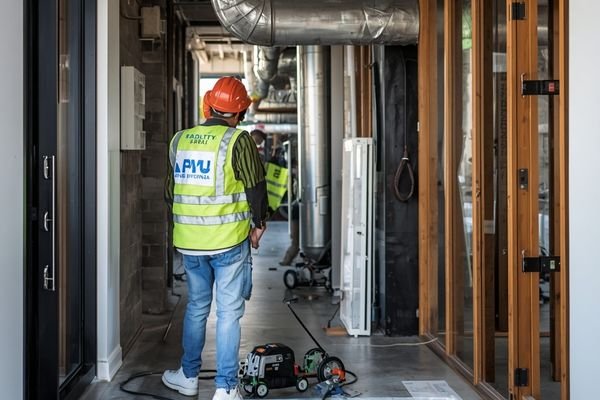
Radon is one of the most overlooked indoor air quality concerns for commercial buildings. Many business owners, property managers, and landlords focus on visible problems such as roof leaks, water damage, mold, cracked drywall, or damaged flooring. However, radon is different because it cannot be seen, smelled, or tasted. It can enter a building quietly from the ground and build up indoors over time.
For commercial buildings in North Carolina, radon mitigation is an important safety step when test results show elevated levels. Offices, retail spaces, warehouses, medical facilities, schools, rental properties, and other commercial buildings can all be affected. Since employees, customers, tenants, and visitors may spend many hours inside these spaces, radon should not be ignored.
What Is Radon and Why Does It Matter?
Radon is a naturally occurring radioactive gas that forms when uranium breaks down in soil, rock, and groundwater. Once radon forms underground, it can move upward through the soil and enter buildings through foundation cracks, slab openings, crawl spaces, floor joints, utility penetrations, and other gaps.
The biggest problem with radon is that there are no obvious signs inside the building. You cannot walk into a room and know whether radon levels are high. The only reliable way to know is through radon testing.
Your Commercial Building Has Never Been Tested for Radon
One of the clearest signs your building may need radon mitigation is that it has never been tested. Many commercial property owners assume radon is only a residential issue, but any building that touches the ground can potentially have radon problems.
If your commercial property has never had professional radon testing, you are working without important information. A building may look clean, modern, and well maintained while still having elevated radon levels.
Previous Radon Test Results Were Elevated
If your building has already been tested and the results showed elevated radon levels, this is the strongest sign that mitigation may be needed. Opening windows or improving ventilation may help temporarily, but it is not a dependable long-term solution.
If your business has received concerning test results, ACS Carolina can help with commercial radon mitigation services designed specifically for commercial properties throughout coastal North Carolina.
Your Building Has a Basement, Crawl Space, or Slab Foundation
Commercial buildings with basements, crawl spaces, or slab foundations may have more pathways for radon to enter. Radon often moves through small cracks, gaps, and openings in the lower parts of a building.
Employees or Tenants Spend Long Hours Inside
Many commercial spaces are occupied for eight hours a day or more. Employees, tenants, customers, patients, students, and visitors may be exposed regularly without knowing it.
Poor Ventilation and Indoor Air Quality Issues
Poor ventilation does not cause radon, but it can allow pollutants to become more concentrated indoors. Buildings with stale air, humidity problems, or outdated HVAC systems should consider professional radon testing.
Foundation Cracks and Structural Openings
Cracks in concrete floors, foundation walls, or lower-level surfaces can create entry points for radon. Over time, buildings naturally settle and develop openings that allow soil gases to enter.
Recent Renovations or Construction Work
Renovations can change how air moves through a building. New flooring, walls, HVAC upgrades, plumbing work, and additions may affect pressure differences and create new radon entry pathways.
Nearby Buildings Have Reported Radon Problems
If neighboring commercial or residential properties have reported elevated radon levels, your building may also be at risk. Local geology and soil conditions can contribute to elevated radon throughout an area.
Buying, Selling, or Leasing Commercial Property
Radon testing is becoming an increasingly important consideration during commercial real estate transactions. Addressing elevated radon levels before a sale or lease can help prevent future complications.
Why Professional Commercial Radon Mitigation Matters
Commercial radon mitigation systems must be designed specifically for the size, layout, and construction of the building. Professional mitigation helps ensure radon levels are reduced effectively and safely.
For additional information about radon risks and testing recommendations, visit the Environmental Protection Agency’s radon resource center.
Final Thoughts
Radon is invisible, odorless, and impossible to detect without testing. If your commercial building has never been tested, has elevated test results, contains lower-level occupied spaces, or has experienced recent renovations, it may be time to consider professional radon mitigation.
Taking action now can help protect employees, customers, tenants, and visitors while improving indoor air quality and supporting a healthier commercial environment.