Commercial buildings in North Carolina need safe, healthy indoor environments for employees, customers, tenants, and visitors. Business owners often focus on visible property concerns such as roof leaks, water damage, mold, electrical issues, flooring problems, and general maintenance. However, one important indoor air quality issue can remain completely hidden: radon.
Radon is a naturally occurring radioactive gas that can enter buildings from the ground. You cannot see it, smell it, or taste it, which makes it difficult to detect without proper testing. Because of this, commercial radon testing plays an important role in protecting people who spend time inside business properties.
For North Carolina businesses, professional radon testing helps identify whether a building has elevated radon levels and whether further action is needed. It gives property owners the information they need to make smart decisions about indoor air quality and long-term building safety.
What Is Radon?
Radon forms naturally when uranium breaks down in soil, rock, and groundwater. As the gas moves upward through the ground, it can enter buildings through cracks, foundation openings, floor joints, crawl spaces, utility penetrations, and other gaps.
Once radon enters a commercial building, it can collect indoors, especially in lower-level spaces or areas with limited ventilation. Since radon does not create a visible warning sign, testing is the only reliable way to know whether a problem exists.
Why Commercial Radon Testing Matters
Commercial radon testing matters because it helps business owners and property managers understand the indoor air conditions inside their buildings. Without testing, elevated radon levels can go unnoticed for years.
Many commercial properties have people inside for long hours each day. Offices, medical buildings, schools, retail stores, restaurants, warehouses, apartment buildings, and mixed-use properties may all have regular occupants. Testing helps protect these people by identifying potential radon concerns early.
Professional testing also supports responsible property management. When business owners test for radon, they show that they take building safety and occupant health seriously.
North Carolina Commercial Buildings Can Have Radon Issues
Some property owners believe radon only affects certain regions or older buildings. In reality, radon can appear in many types of buildings, including newer commercial properties. Any structure that touches the ground can potentially allow radon to enter.
North Carolina has different soil conditions, building types, and weather patterns that can influence radon movement. Coastal commercial buildings may also face unique indoor air quality challenges due to moisture, ventilation patterns, and construction styles.
This is why commercial radon testing is important for businesses throughout the state. Testing gives property owners real data instead of assumptions.
Buildings That Should Consider Commercial Radon Testing
Many types of commercial properties can benefit from radon testing, including:
- Office buildings
- Retail stores and shopping centers
- Medical clinics and healthcare facilities
- Schools and childcare centers
- Apartment buildings
- Hotels and hospitality properties
- Warehouses
- Restaurants
- Government buildings
- Mixed-use commercial properties
If people work, live, shop, study, or receive services inside the building, radon testing is a smart safety step.
When Should a Commercial Building Be Tested?
Property owners should consider commercial radon testing in several situations. A building should be tested if it has never been tested before, if it has lower-level occupied spaces, or if nearby properties have reported elevated radon levels.
Testing is also useful before buying, selling, or leasing a commercial property. It can help buyers understand the condition of the building and help sellers address concerns before a transaction becomes complicated.
Commercial buildings should also be tested after major renovations, HVAC changes, foundation repairs, or layout changes. These updates can affect airflow and pressure inside the building, which may influence radon levels.
How Commercial Radon Testing Works
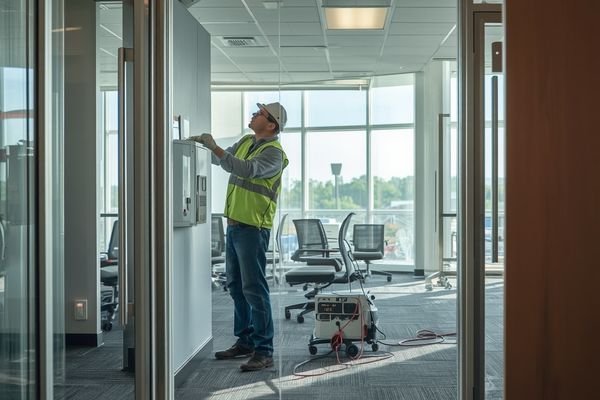
Commercial radon testing usually involves placing testing devices in selected areas of the building. Professionals choose testing locations based on the building layout, occupancy areas, foundation type, and ground-contact spaces.
Radon professionals often test lower-level rooms, offices, classrooms, tenant spaces, storage areas, and other occupied sections of the building. The testing period depends on the method used and the purpose of the test.
After the test period ends, the results show whether radon levels are elevated. Property owners can then decide whether mitigation is needed.
Why Professional Testing Is Better Than Guesswork
Commercial buildings can be more complex than homes. They often have larger floor plans, multiple rooms, different foundation sections, HVAC systems, and varying occupancy patterns. Because of this, commercial testing needs careful planning.
Professional testing helps ensure accurate placement, reliable results, and proper interpretation. Instead of guessing whether a building is safe, property owners receive clear information they can use to make decisions.
Businesses that need reliable commercial radon testing services can work with experienced professionals who understand commercial properties and local building conditions.
What Happens If Radon Levels Are High?
If testing shows elevated radon levels, the next step is usually mitigation. Commercial radon mitigation systems help reduce indoor radon by directing the gas away from occupied spaces.
Mitigation may include sub-slab depressurization, crawl space treatment, vent piping, radon fans, and sealing major entry points. The best solution depends on the building’s design and test results.
Testing does not create the problem; it helps reveal the problem. Once property owners know the radon level, they can take practical steps to reduce risk and improve indoor air quality.
Benefits of Commercial Radon Testing
Commercial radon testing offers several important benefits for North Carolina property owners and managers.
- It identifies hidden radon concerns.
- It supports healthier indoor air quality.
- It helps protect employees, customers, tenants, and visitors.
- It provides useful information during property transactions.
- It helps guide mitigation decisions.
- It supports responsible property maintenance.
- It gives business owners confidence about their building environment.
These benefits make testing a valuable part of commercial building care.
Testing Helps Protect Employees and Customers
Employees may spend many hours inside a commercial building every week. Customers, clients, patients, students, and visitors may also spend time in the property. When a building has elevated radon levels, regular exposure can become a concern.
Commercial radon testing helps business owners identify risks before they become long-term problems. By testing the building, owners and managers take an active step toward protecting the people who rely on the property every day.
Radon Testing and Property Value
Commercial radon testing can also support property value. Buyers, tenants, and investors often want to know that a building has received proper care. Indoor air quality is part of that bigger picture.
If a test shows low radon levels, property owners gain helpful documentation. If a test shows elevated levels, they can address the issue through mitigation. Either way, testing creates clarity and reduces uncertainty.
Using Trusted Radon Guidance
Property owners should rely on trusted information when making decisions about radon. The EPA provides radon guidance for non-residential buildings, including information that can help schools, businesses, and commercial property owners understand radon concerns.
Professional testing combined with reliable guidance gives business owners a stronger foundation for protecting indoor environments.
Final Thoughts
Commercial radon testing is an important step for North Carolina businesses and property managers. Because radon is invisible and odorless, testing is the only way to know whether a building has elevated levels.
By testing commercial properties, owners can identify hidden risks, protect employees and customers, support indoor air quality, and make informed decisions about mitigation. Whether you manage an office, retail space, healthcare facility, apartment building, school, or warehouse, radon testing is a smart part of responsible property care.
For North Carolina commercial buildings, taking action early can help create safer, healthier spaces for everyone who enters the property.