Outdoor Shower Installation in Hampstead, NC: What Homeowners Should Know
For homeowners in Hampstead, NC, an outdoor shower can be both a practical addition and an enjoyable part of a coastal outdoor living space. It provides a convenient place to rinse off after a day at the beach, clean up after working in the yard, wash sandy feet, or keep outdoor messes from being carried through the house.
But installing an outdoor shower involves more than choosing a showerhead and finding an empty corner of the backyard. Privacy, drainage, plumbing, materials, location, and exposure to coastal weather all need to be considered before construction begins.
Whether you are planning a simple rinse station or a fully enclosed outdoor shower, understanding these details can help you create a space that works well with your Hampstead home.
Why Consider an Outdoor Shower in Hampstead?
Outdoor showers are particularly useful in coastal communities. Sand, saltwater, mud, grass, and other outdoor debris can easily make their way into a home after time spent outside.
Having a dedicated rinsing area gives family members and guests somewhere to clean up before entering the house.
An outdoor shower can be useful for:
- Rinsing off after beach trips
- Cleaning sandy feet and beach equipment
- Washing off after gardening or yard work
- Rinsing pets
- Cleaning outdoor equipment
- Providing an additional shower during busy gatherings
- Complementing a pool, patio, or outdoor living area
With the right design, the shower can also become an attractive architectural feature rather than simply a utility area.
Choose the Right Location
Location is one of the first decisions to make when planning an outdoor shower.
For convenience, many homeowners place the shower relatively close to the house, pool, patio, or route used when returning from the beach. Existing plumbing locations may also influence where installation is most practical.
At the same time, the area needs enough privacy and appropriate drainage.
Before selecting a location, consider:
- Access to existing water lines
- Privacy from neighboring properties
- Drainage around the shower
- Distance from frequently used entrances
- Sun and shade throughout the day
- Exposure to wind and rain
- How people will access the shower
A carefully selected location can make the shower easier to install and more convenient to use.
Decide Between a Simple Rinse Station and a Full Shower
Not every outdoor shower needs to be fully enclosed.
A simple rinse station may consist of a wall-mounted showerhead near a patio or side entrance. This can work well when the primary purpose is removing sand, salt, or dirt before entering the house.
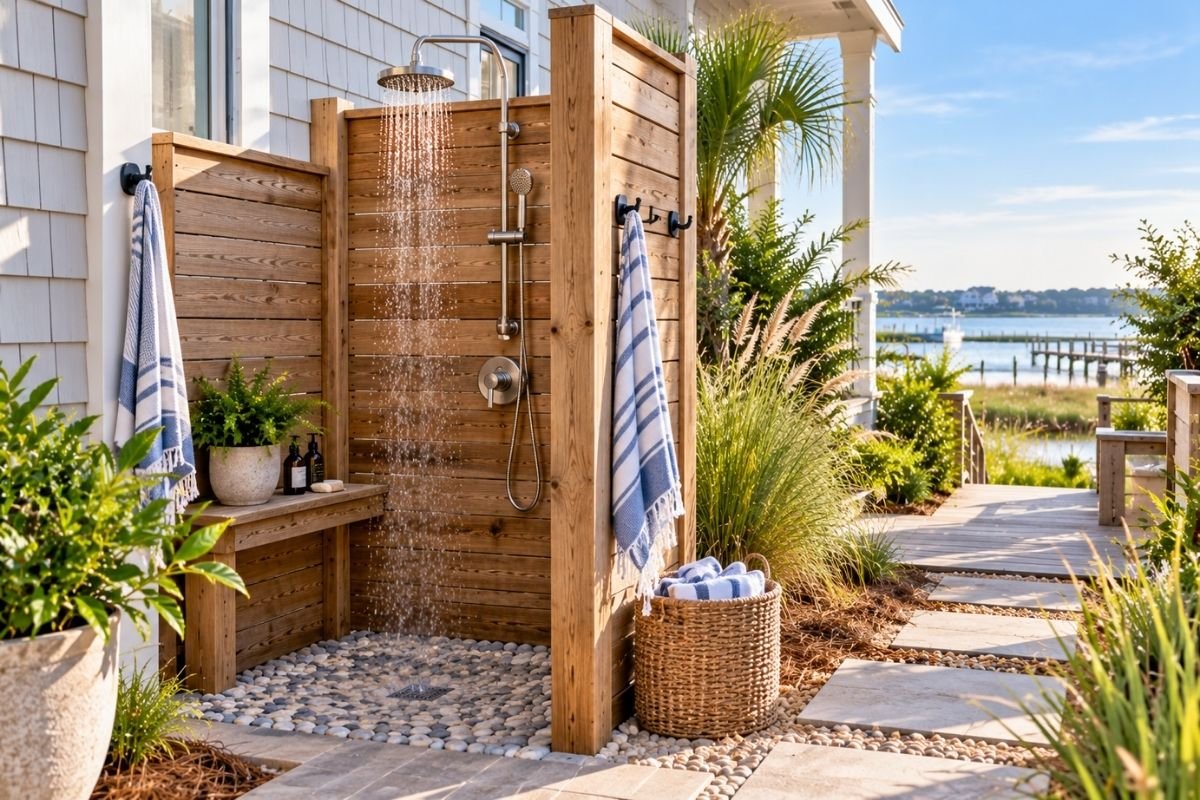
A more complete outdoor shower can include privacy walls, a door, hot and cold water, hooks, shelving, a bench, lighting, and a dedicated drainage system.
Think about who will use the shower and how it will be used before deciding how elaborate the design needs to be.
Plan for Privacy
Privacy becomes especially important if the outdoor shower will be used as more than a basic rinse station.
There are several ways to create privacy while keeping the shower connected to the surrounding outdoor space.
Options may include:
- Wood privacy walls
- Composite panels
- Masonry walls
- Decorative screens
- Fencing
- Strategically positioned landscaping
The enclosure should provide adequate coverage while allowing appropriate airflow and drainage.
Homeowners should also consider views from neighboring homes, decks, upper-level windows, and nearby outdoor spaces when deciding on enclosure height and placement.
Consider Hot and Cold Water
A cold-water shower may be sufficient when the goal is simply rinsing sand from feet or washing outdoor equipment.
For a shower that will be used regularly for bathing, however, having both hot and cold water can make the space considerably more comfortable.
The feasibility and cost of adding hot water can depend on the shower’s location relative to existing plumbing and the home’s water-heating system.
Planning plumbing before building the enclosure or finished surfaces can make installation much easier.
Drainage Is an Important Part of the Project
Every outdoor shower needs somewhere for the water to go.
Allowing water to continually collect around the shower can create muddy areas, slippery surfaces, standing water, and potential moisture problems around nearby structures.
The appropriate drainage approach depends on the location, soil conditions, shower usage, surrounding surfaces, and applicable local requirements.
Some designs may use a properly prepared permeable area, while others may require a more structured drainage solution.
Drainage should be considered before construction rather than after the shower is already being used.
Select Materials for Coastal Conditions
Hampstead’s coastal environment can expose outdoor structures to humidity, rain, sunlight, and salt carried through the air.
Materials used for an outdoor shower should therefore be suitable for regular exterior exposure.
Depending on the design, homeowners may consider:
- Pressure-treated or naturally durable wood
- Composite materials
- Stone
- Exterior-rated tile
- Concrete
- Corrosion-resistant fixtures and hardware
Materials should also be relatively easy to clean because soap residue, sand, moisture, and outdoor debris may regularly reach the shower surfaces.
Choose Flooring With Safety in Mind
Outdoor shower flooring will frequently be wet, so traction and drainage should be considered alongside appearance.
Depending on the installation, homeowners may use textured tile, stone, concrete, decking, or another outdoor-appropriate surface.
The floor should allow water to drain effectively and should not become excessively slippery when wet.
If wooden or composite decking is used, sufficient spacing and airflow may also be important for allowing moisture to escape.
Add Practical Storage
Small details can make an outdoor shower considerably easier to use.
Hooks can provide somewhere to hang towels and clothing. A shelf or recessed storage area can hold soap and shampoo, while a small bench may provide a convenient place for personal items.
If the shower is frequently used after beach trips, homeowners may also want a nearby location for storing or rinsing sandals, beach toys, boards, and other equipment.
Think About Lighting
If the shower may be used after sunset, appropriate outdoor lighting can improve both convenience and safety.
Lighting should illuminate the entrance and shower area without unnecessarily reducing privacy or creating excessive brightness for neighboring properties.
Any electrical equipment installed near wet areas needs to be suitable for the location and installed according to applicable electrical requirements.
Consider Ventilation and Airflow
A completely enclosed outdoor shower may retain moisture if there is not enough airflow.
Providing appropriate openings or spacing can help the shower dry more effectively between uses.
This is particularly useful in humid coastal conditions where surfaces may naturally take longer to dry.
Good airflow can also make the shower more comfortable during warmer months.
Make the Shower Fit Your Home’s Style
An outdoor shower can look like an intentional part of the property rather than a separate utility structure.
One approach is to repeat materials or design details already found on the home, porch, deck, or patio.
For example, a coastal home with light siding and natural wood accents might use similar finishes around the shower enclosure. A property with stone hardscaping could incorporate matching stone into the shower floor or surrounding area.
Simple landscaping around the enclosure can further connect the shower with the rest of the backyard.
Plan for Maintenance
Because an outdoor shower is exposed to both water and weather, occasional maintenance should be expected.
Homeowners should periodically inspect:
- Shower fixtures and connections
- Wood or composite enclosure panels
- Fasteners and hardware
- Drainage areas
- Flooring and grout
- Seals around plumbing penetrations
Cleaning salt, sand, leaves, and other debris from the shower can also help keep the area functional and attractive.
Prepare Outdoor Plumbing for Colder Weather
Although coastal North Carolina generally experiences relatively mild winters, outdoor plumbing can still be exposed to freezing temperatures.
Outdoor shower plumbing should be designed so it can be appropriately protected when cold weather arrives. Depending on the system, this may involve shutting off the water supply and draining exposed lines.
The National Weather Service provides cold-weather safety information that homeowners can use when preparing their properties for freezing conditions.
Check Requirements Before Installation
The scope of an outdoor shower project can vary considerably. A simple exterior rinse station may involve different considerations from a fully plumbed and enclosed shower.
Plumbing, drainage, electrical work, structural changes, and enclosure construction may be subject to applicable requirements depending on the project.
Before beginning significant work, homeowners should confirm what applies to their property and use qualified professionals where appropriate.
Professional Help Can Simplify the Project
An outdoor shower may involve several different parts of a property, including plumbing, drainage, carpentry, exterior finishes, lighting, and surrounding hardscape.
Planning these elements together can help create a finished space that looks intentional and functions properly.
Atlantic Coastal Solutions provides home improvement, repair, maintenance, and customization services throughout coastal North Carolina. Homeowners considering an outdoor shower or other exterior improvement can explore the company’s home and property services for more information.
Create an Outdoor Shower That Works for Your Hampstead Home
An outdoor shower can be a simple but valuable addition to a Hampstead property, especially for households that regularly enjoy the beach, pool, yard, or other outdoor activities.
The key is planning beyond the shower fixture itself. Location, privacy, drainage, plumbing, flooring, weather-resistant materials, storage, and maintenance all influence how well the finished space performs.
By considering these details before installation begins, homeowners can create an outdoor shower that is convenient, attractive, and well suited to coastal North Carolina living.