Pergola Installation in Hampstead, NC: Create a Better Outdoor Living Space
A pergola can change the way you use your backyard. It creates a defined outdoor area for relaxing, dining, entertaining, or spending more time outside.
For homeowners in Hampstead, NC, a pergola can also add useful shade and structure to a patio, deck, or garden area. The right design can make an outdoor space feel more comfortable without fully enclosing it.
Before starting a pergola installation project, it helps to think about location, size, materials, shade, wind exposure, and how the structure will connect with the rest of your property.
Why Add a Pergola to Your Hampstead Home?
A pergola can add both function and visual interest to a backyard.
It can create a natural gathering area without the heavier look of a fully enclosed structure. Homeowners often use pergolas above patios, outdoor dining areas, lounge spaces, gardens, and outdoor kitchens.
A pergola may help you:
- Create a defined outdoor room
- Add partial shade
- Improve an existing patio
- Create a dining or seating area
- Support climbing plants
- Add lighting and outdoor décor
- Connect different backyard areas
The structure can be simple or highly customized depending on the property.
Choose the Right Location
Location plays a major role in how useful a pergola becomes.
Some homeowners place a pergola directly outside the back door. This creates a smooth transition between indoor and outdoor living areas.
Others use a pergola farther into the backyard to create a separate retreat.
Before choosing the location, consider:
- Sun exposure
- Existing patios or decks
- Views from the home
- Nearby trees
- Wind direction
- Drainage
- Access from the house
- Space for furniture
A good location should feel convenient and natural within the property.
Think About How Much Shade You Want
Pergolas usually provide partial shade rather than complete coverage.
The spacing and direction of the overhead slats can affect how much sunlight reaches the area below.
Homeowners who want more shade may choose tighter spacing. They may also add a retractable canopy, shade fabric, or climbing plants.
Think about when you plan to use the space most often. Morning and afternoon sun can affect the area very differently.
Select a Size That Fits the Backyard
A pergola should feel balanced with the surrounding property.
A very large structure can overwhelm a small patio. A pergola that is too small may not provide enough room for furniture or entertaining.
Before deciding on dimensions, think about what you want to place underneath it.
You may need space for:
- An outdoor dining table
- A lounge set
- A grill or outdoor kitchen
- A fire table
- Planters
- Walkways
Measure the furniture and circulation space before finalizing the pergola size.
Choose Materials for Coastal Conditions
Hampstead’s coastal environment can affect outdoor structures over time.
Humidity, rain, strong sunlight, and salt in the air can influence wood, hardware, fasteners, and finishes.
Homeowners may consider wood, composite materials, vinyl, aluminum, or other exterior-rated products.
Each option has different maintenance needs and appearance.
Choose materials based on durability as well as style.
Wood Pergolas
Wood offers a natural and traditional appearance.
It can work well with coastal homes, patios, gardens, and outdoor kitchens. Homeowners can also stain or paint it to match the property.
However, wood usually requires regular maintenance. Moisture and sun exposure can affect the finish over time.
Proper sealing, painting, or staining may help protect the structure.
Low-Maintenance Pergola Materials
Some homeowners prefer materials that require less routine maintenance.
Composite, vinyl, and aluminum pergolas may offer different levels of weather resistance and maintenance needs.
These options can also suit modern or contemporary homes.
Compare the appearance, cost, maintenance, and structural needs before making a decision.
Use the Pergola to Define a Dining Area
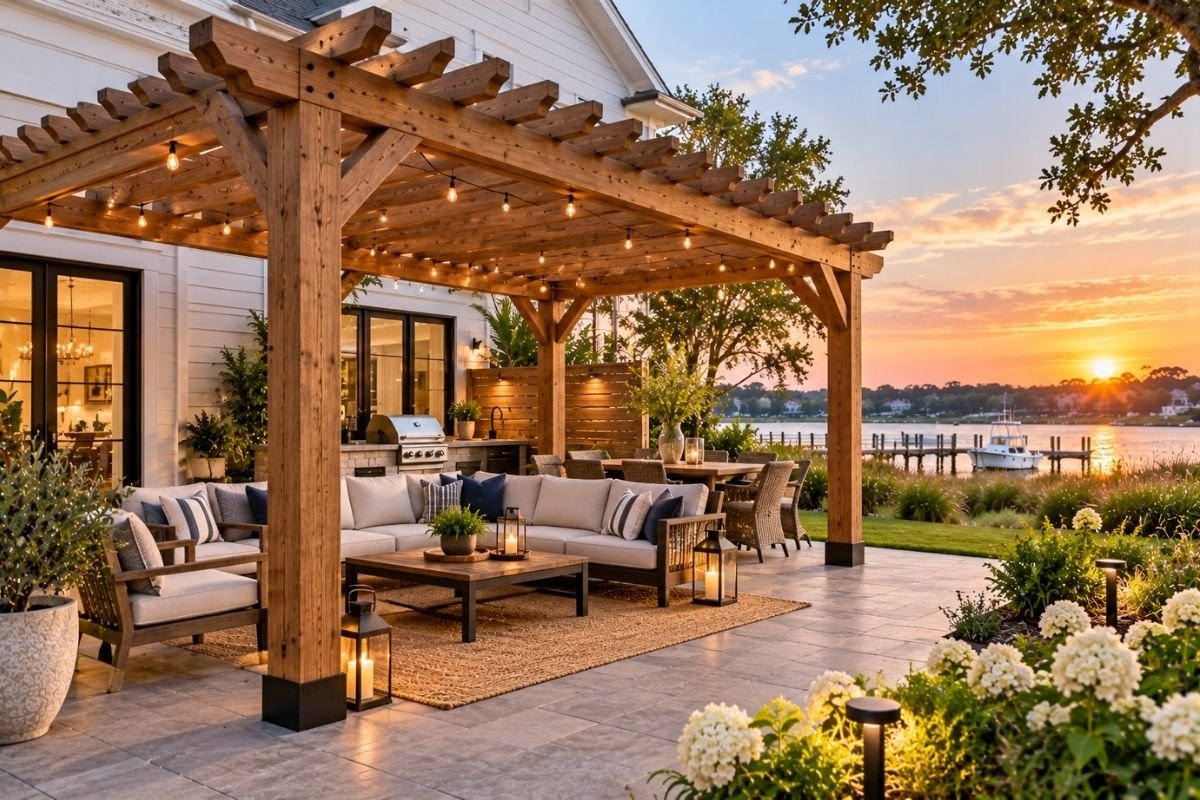
A pergola can turn an open patio into a more inviting dining space.
Place an outdoor table beneath the structure and add lighting above it. This can create a comfortable setting for family meals and gatherings.
The pergola helps visually separate the dining area from the rest of the backyard.
It can also make the patio feel more like an extension of the home.
Pair a Pergola With an Outdoor Kitchen
Pergolas and outdoor kitchens can work well together when planned carefully.
The pergola can help define the cooking and dining area while adding shade to nearby seating.
If you are planning both features, review these ideas for outdoor kitchen installation in Hampstead, NC. Planning both spaces together can create a more connected backyard.
Always consider heat, smoke, ventilation, and appliance clearance when placing a pergola near cooking equipment.
Add Outdoor Lighting
Lighting can make a pergola more useful after sunset.
String lights, pendant fixtures, recessed lights, or wall lighting can help create a comfortable evening space.
Task lighting may also help if the pergola sits near an outdoor kitchen.
Plan electrical needs before construction whenever possible.
Consider a Ceiling Fan
A ceiling fan can improve comfort during warm weather.
It can help move air through a covered or partially shaded outdoor space.
The pergola must provide suitable support for the fan and electrical components.
Use fixtures designed for outdoor locations.
Add Privacy Without Closing the Space
A pergola can provide some separation without making the backyard feel enclosed.
Homeowners can add privacy with:
- Slatted side panels
- Outdoor curtains
- Decorative screens
- Landscaping
- Climbing plants
These features can help block unwanted views while keeping the area open to fresh air.
Use Climbing Plants for a Natural Look
Climbing plants can soften the appearance of a pergola.
They may also provide extra shade as they grow across the structure.
Choose plants that suit the local climate and the amount of sunlight in the area.
Keep growth under control so plants do not interfere with the structure, lighting, or nearby surfaces.
Think About Wind Exposure
Coastal properties can experience strong winds during storms and tropical weather.
The pergola needs proper anchoring and structural support.
Freestanding structures may need different support from pergolas attached to the home.
Homeowners should also secure or remove lightweight curtains, shade panels, and decorations before severe weather arrives.
Plan Around Rain and Drainage
A pergola does not usually stop all rain.
Water can still reach the patio and furniture below.
Make sure the surrounding area drains properly. Water should not collect around pergola posts or nearby foundations.
If you add a solid or retractable cover, consider where roof runoff will go.
Connect the Pergola With Landscaping
Landscaping can help a pergola feel like part of the backyard.
Plant beds, planters, shrubs, or ornamental grasses can soften the edges of the structure.
A pathway can also connect the pergola with the home, pool, garden, or other outdoor areas.
Repeating materials from the house or patio can create a more consistent look.
Create Different Outdoor Zones
Larger backyards may benefit from several defined areas.
You might use one zone for cooking and another for dining. A separate area could provide lounge seating or a fire feature.
A pergola can help visually organize these spaces.
This makes the backyard feel more intentional and easier to use.
Think About Furniture Before Construction
Furniture should influence the pergola design from the beginning.
Measure your dining table, chairs, sofa, or lounge furniture before choosing the final dimensions.
Leave enough room for people to move comfortably around the furniture.
This can prevent the finished space from feeling crowded.
Check Local Requirements
Pergola projects can vary in size, design, and construction method.
Some structures may require permits, inspections, or other approvals. Requirements may depend on whether the pergola is attached to the home, its size, and the property location.
Homeowners can review local planning and development information through Pender County. Confirm current requirements before starting construction.
Plan for Long-Term Maintenance
A pergola will remain exposed to outdoor conditions throughout the year.
Inspect the structure regularly for loose hardware, damaged finishes, movement, or signs of moisture damage.
Wood structures may need periodic staining or painting. Other materials may only need routine cleaning.
Regular maintenance can help keep the pergola looking attractive and functioning properly.
Create an Outdoor Space That Fits Your Lifestyle
The best pergola design depends on how you plan to use the backyard.
A family that enjoys outdoor meals may prioritize a large dining area. Someone who prefers quiet evenings may choose comfortable lounge seating and soft lighting.
Homeowners who entertain often may want to connect the pergola with an outdoor kitchen or patio.
Choose a design that supports the way you actually spend time outside.
Improve Your Hampstead Outdoor Living Space
A pergola can bring structure, shade, and personality to a Hampstead backyard.
It can define a patio, support an outdoor dining area, complement an outdoor kitchen, or create a comfortable place to relax.
Start with the right location and size. Then choose materials that suit coastal conditions.
Plan shade, lighting, drainage, privacy, and furniture before construction begins.
With thoughtful planning, a pergola can become a useful and attractive part of your outdoor living space for years to come.