When to Replace Outdated Lighting Fixtures in Wilmington, NC
Lighting fixtures do more than brighten a room. They affect how a space looks, how comfortably it functions, and how easy everyday tasks feel.
Over time, however, a light fixture can become outdated, damaged, unreliable, or poorly suited to the room. Some fixtures continue working but no longer provide the type of lighting the homeowner needs.
For homeowners in Wilmington, NC, replacing the right fixtures can improve both function and appearance. The key is knowing when an older fixture still works well and when an upgrade makes more sense.
Here are common signs that it may be time to replace lighting fixtures around your home.
1. The Fixture No Longer Matches the Room
A light fixture can remain functional long after the surrounding room has changed.
New paint, flooring, furniture, or cabinetry may make an older fixture feel disconnected from the updated design.
Replacing it can help bring the room together.
Choose a style that complements the space without overpowering it.
2. The Room Still Feels Too Dark
A working fixture does not always provide enough useful light.
If a room consistently feels dark, consider whether the existing fixture suits the size and purpose of the space.
The problem may involve fixture placement, light output, or the overall lighting plan.
A better fixture can sometimes make the room more functional.
3. One Fixture Creates Too Much Glare
More brightness is not always better.
A poorly selected fixture can create uncomfortable glare while leaving other parts of the room underlit.
Consider how the light spreads through the space.
A different fixture design may provide more balanced illumination.
4. The Fixture Flickers With Compatible Bulbs
Start by checking the bulb when a light flickers.
If a known compatible bulb does not solve the issue, the fixture or electrical connection may need attention.
Persistent flickering should not simply become normal.
Have the cause evaluated before deciding whether repair or replacement is appropriate.
5. The Light Turns Off Unexpectedly
A fixture should operate consistently.
If it shuts off without someone operating the switch, investigate the problem.
The cause could involve the fixture, bulb, control, connection, or another electrical issue.
Do not assume that repeated interruptions are harmless.
6. The Fixture Has Visible Damage
Inspect older fixtures periodically.
Look for cracked components, damaged sockets, loose parts, broken shades, or other deterioration.
Some decorative pieces can be replaced separately.
More significant damage may make full fixture replacement the better choice.
7. The Fixture Is Loose
A ceiling or wall fixture should remain securely mounted.
Movement can place stress on its mounting hardware and connections.
Do not ignore a fixture that hangs unevenly or pulls away from the surface.
Have the mounting point and fixture inspected.
8. You Notice Discoloration Near the Fixture
Unusual darkening or heat-related marks around a fixture deserve professional attention.
Do not cover the area with fresh paint before understanding the cause.
Replacing the decorative fixture alone may also be insufficient.
The electrical condition should be evaluated first.
9. There Is an Unusual Burning Odor
A burning or hot-plastic smell near an electrical fixture is a warning sign.
Stop using the affected fixture when it is safe to do so.
Arrange for qualified electrical assistance rather than continuing to test it.
The cause should be identified before the fixture returns to service.
10. Bulbs Need Replacement Too Frequently
Light bulbs eventually fail, but unusually frequent failures deserve attention.
Check that the bulbs are appropriate for the fixture.
If the problem continues, have the fixture and electrical conditions evaluated.
Repeatedly installing new bulbs may not address the underlying issue.
11. The Kitchen Needs Better Task Lighting
Kitchen lighting should support cooking, cleaning, and food preparation.
An old central fixture may illuminate the room while leaving counters in shadow.
Updated lighting can provide better coverage where work actually happens.
Consider the island, sink, counters, and cooking areas when planning improvements.
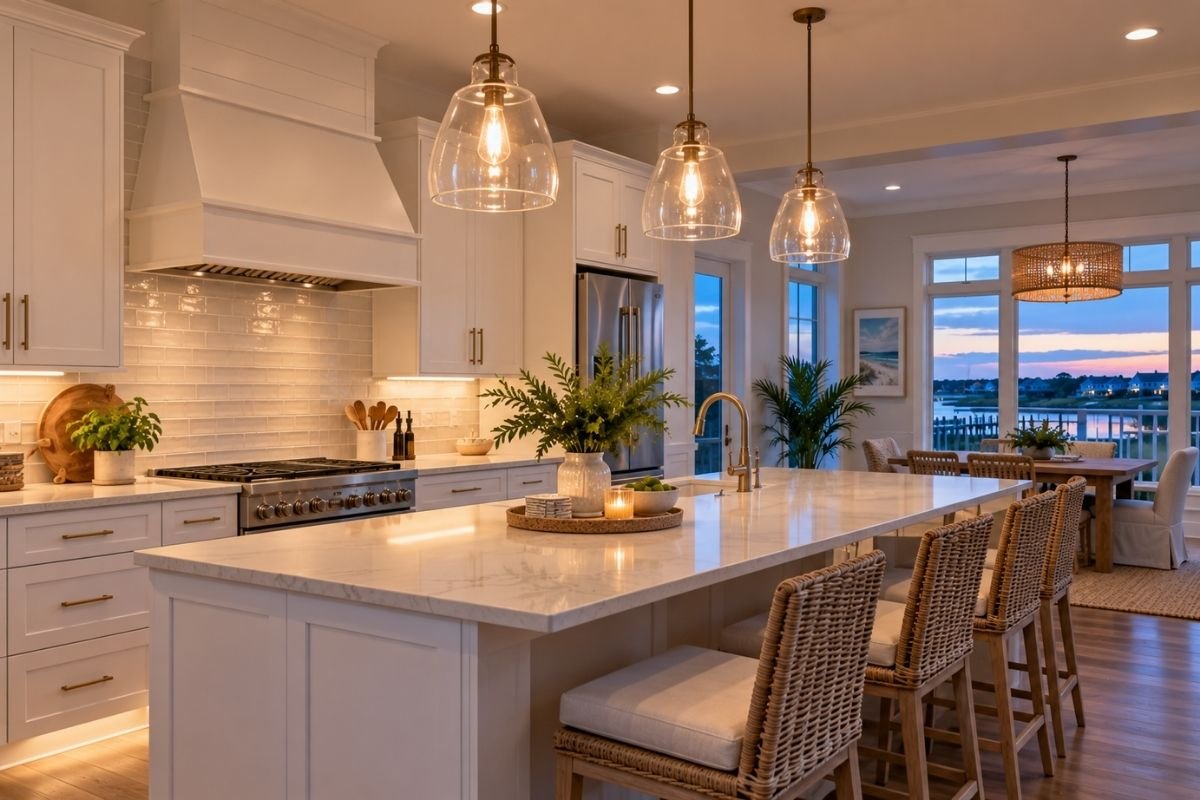
12. Pendant Lights Can Refresh a Kitchen Island
Pendant fixtures can combine useful illumination with visual interest.
Their size and spacing should suit the island.
Fixtures should not block sightlines or hang where people may bump into them.
Plan the arrangement before installation begins.
13. Dining Lighting Should Fit the Table
The dining fixture often anchors the entire space.
A fixture that is too small can feel lost. One that is too large can dominate the room.
Consider the table dimensions and ceiling height when selecting a replacement.
Proper scale can make a major visual difference.
14. Living Rooms Benefit From Layered Lighting
A living room may serve several purposes throughout the day.
One overhead light rarely handles every activity perfectly.
Consider combining general lighting with lamps or other appropriate fixtures.
This gives the room more flexibility for relaxing, reading, and entertaining.
15. Replace Outdated Bathroom Vanity Lights
Vanity lighting can affect everyday grooming and bathroom comfort.
An older fixture may create strong shadows or uneven illumination.
A carefully chosen replacement can improve visibility and update the room at the same time.
Select a fixture suitable for the installation location.
16. Bedroom Fixtures Can Be Simple but Functional
Bedroom lighting does not need to be complicated.
It should provide comfortable general illumination and support how you use the room.
An outdated ceiling fixture can often be replaced without redesigning the entire space.
Choose a size that works with the room and ceiling height.
17. Consider a Ceiling Fan With Lighting
Some Wilmington homeowners prefer a ceiling fan that also provides room lighting.
This can combine two functions in one fixture.
However, ceiling fans require suitable mounting support.
Do not assume that an existing light fixture box is automatically appropriate for a fan.
18. Hallways Need Adequate Lighting Too
Hallways may not receive the same design attention as kitchens and living rooms.
Still, they are used throughout the day.
Replace fixtures that provide poor visibility or no longer operate reliably.
Low-profile designs can work well where ceiling clearance is limited.
19. Entryway Lighting Creates the First Impression
An entry fixture can help establish the style of the home.
It also needs to provide useful illumination when people arrive or leave.
Choose a fixture that fits the dimensions of the entry.
Large decorative fixtures need adequate ceiling height and clearance.
20. Exterior Lighting Also Ages
Outdoor fixtures experience more demanding conditions than most indoor lighting.
Rain, humidity, temperature changes, and coastal air can affect exposed materials.
Inspect exterior lights around doors, porches, garages, and patios.
Replace fixtures that show significant damage or deterioration.
21. Wilmington’s Coastal Climate Matters
Fixture selection is especially important for exposed areas of coastal homes.
Humidity and salt carried in the air can contribute to deterioration of some finishes and materials.
Choose exterior products designed for their intended environment.
Regular cleaning and inspection can also help you notice changes early.
22. Improve Porch Lighting
A porch can function as an outdoor room in coastal North Carolina.
Appropriate lighting makes it more useful after sunset.
Consider seating areas, doors, stairs, and walking paths when planning fixture placement.
The goal is useful illumination without excessive glare.
23. Update Patio and Backyard Lighting
Outdoor entertaining spaces may need several types of lighting.
Dining areas need visibility, while seating areas may benefit from softer illumination.
Steps and transitions between levels also deserve attention.
A thoughtful lighting plan can make the entire backyard easier to use.
24. Coordinate Lighting With Other Outdoor Improvements
Lighting works best when it is planned alongside the rest of an outdoor project.
For example, cooking and dining areas need different lighting than open lawn or lounge spaces.
If you are improving your backyard, see how an outdoor kitchen can transform a Wilmington, NC backyard.
Planning the electrical fixtures early can create a more cohesive finished space.
25. Consider LED Lighting During Replacement
A fixture upgrade is a good opportunity to review the type of lighting you use.
LED products are available for many residential applications and can use less energy than traditional incandescent lighting.
The U.S. Department of Energy provides additional guidance about LED lighting and energy efficiency.
Compare brightness, color temperature, compatibility, and intended use when selecting products.
26. Pay Attention to Color Temperature
Two bulbs can provide similar brightness while making a room feel very different.
Some light sources create a warmer appearance, while others appear cooler.
Think about the atmosphere you want in each room.
Keeping related fixtures reasonably consistent can help create a more polished result.
27. Dimmers Can Add Flexibility
Some rooms benefit from adjustable lighting.
A dining room may need brighter light for certain activities and softer illumination during dinner.
Living rooms and bedrooms can also benefit from flexibility.
Make sure the dimmer, fixture, and light source are compatible.
28. Smart Controls May Be Useful in Some Homes
Compatible smart switches or lighting controls can add convenience.
Depending on the system, homeowners may be able to schedule lights or control them remotely.
Not every existing electrical setup is suitable for every product.
Check compatibility before choosing a system.
29. Replace Fixtures Before Final Painting
If you are planning both electrical upgrades and interior painting, consider the project order.
Removing an old fixture may reveal marks or differences in the finished surface.
Electrical work can also require adjustments around mounting points.
Complete necessary fixture work before final touch-ups whenever practical.
30. Do Not Treat Electrical Repair as Decoration
Choosing a new fixture is a design decision. Connecting it to the electrical system is electrical work.
If the existing wiring, electrical box, switch, or mounting point has a problem, the issue should be corrected properly.
Qualified electrical help is especially important when you discover damaged wiring, unusual heat, burning odors, repeated breaker trips, or other concerning symptoms.
A beautiful fixture should also be installed correctly and operate reliably.
Refresh Your Wilmington Home With Better Lighting
Lighting fixture replacement can be a focused way to improve a Wilmington, NC home.
You may want better task lighting in the kitchen, a more attractive dining fixture, improved bathroom lighting, or durable exterior fixtures for your porch and patio.
Start with function. Consider the size and purpose of the room, then choose a fixture that complements the home’s design.
For coastal properties, also pay attention to outdoor exposure and material durability. With careful selection and proper installation, new lighting can make your home brighter, more comfortable, and more enjoyable to use.