Hidden Water Damage in Surf City, NC Homes: Signs You Shouldn’t Ignore
Water damage is not always obvious. A flooded room or dripping ceiling is easy to notice, but moisture can also enter a Surf City home without leaving a large puddle behind.
Heavy rain, coastal storms, plumbing leaks, damaged seals, and appliance problems can allow water to reach walls, ceilings, cabinets, and flooring. The visible symptom may appear far from the original source.
Finding hidden water damage early can help homeowners address the moisture source before repairs become more extensive.
Here are warning signs Surf City, NC homeowners should watch for throughout the home.
1. New Stains on Walls or Ceilings
Discoloration is one of the most recognizable signs of unwanted moisture.
A stain may appear yellow, brown, or darker than the surrounding paint.
Do not simply cover it with fresh paint.
First, determine where the moisture came from and whether the affected material is dry.
2. Bubbling or Blistering Paint
Paint should remain firmly attached to a properly prepared wall.
If bubbles suddenly appear, moisture may be affecting the surface from behind.
The problem can occur on walls or ceilings.
Investigate the cause before repairing the finish.
3. Peeling Paint After Heavy Rain
Peeling paint can develop for several reasons.
When it appears soon after severe weather, however, water intrusion deserves consideration.
Inspect nearby windows, exterior walls, ceilings, and trim.
Repainting without correcting the cause may allow the damage to return.
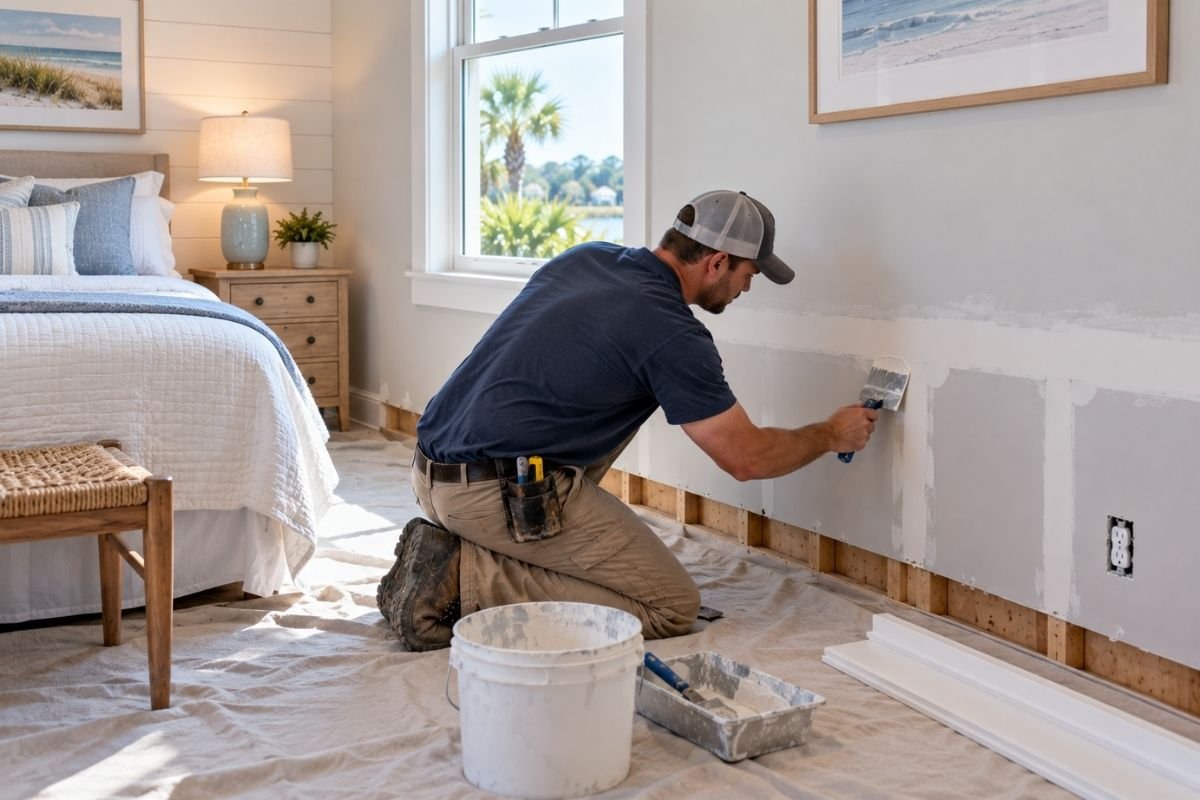
4. Soft or Spongy Drywall
Drywall should feel solid under normal conditions.
Material that feels soft, swollen, or unusually weak may have absorbed moisture.
Affected drywall should be evaluated before cosmetic repairs begin.
Some damaged material may need replacement rather than another layer of compound and paint.
5. A Musty Smell With No Obvious Source
An unusual musty odor can be an early clue that moisture is trapped somewhere nearby.
Check closets, cabinets, baseboards, flooring, and areas behind furniture.
Also inspect rooms next to bathrooms, kitchens, and laundry areas.
Do not rely on fragrances to cover a persistent odor.
6. Swollen Baseboards
Baseboards can reveal water damage near floor level.
They may swell, warp, separate from the wall, or develop staining.
The drywall behind them may also be affected.
Look for the source before replacing damaged trim.
7. Warped or Buckled Flooring
Changes in flooring can indicate moisture below the visible surface.
Boards may lift, cup, separate, or feel different underfoot.
The finished floor is only part of the system.
Moisture may also affect the underlayment or subfloor beneath it.
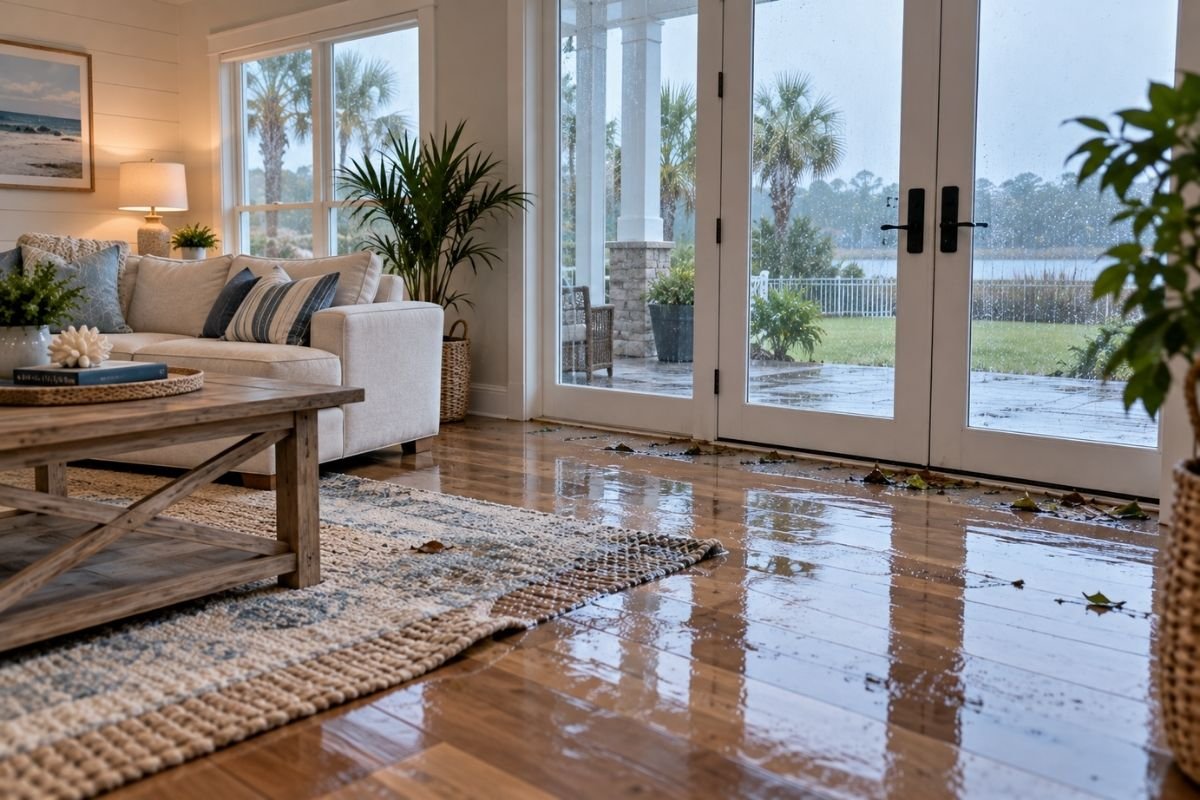
8. Loose Flooring Near Exterior Doors
Doors can become vulnerable areas during wind-driven rain.
Inspect flooring near exterior entrances after severe weather.
Look for discoloration, swelling, loose material, or dampness around the threshold.
The entry point should be corrected before interior finishes are restored.
9. Changes Around Windows
Surf City homes can experience rain driven against windows during coastal weather.
Look for stains, peeling paint, damaged drywall, swollen trim, or damp areas around the frame.
Water can sometimes travel inside the wall before becoming visible.
That makes even a small recurring stain worth investigating.
10. Ceiling Texture That Suddenly Changes
Water exposure can alter the appearance of a ceiling.
You may notice sagging, cracking, discoloration, or an area that looks different from the surrounding finish.
A damaged ceiling can also create a safety concern.
Avoid standing beneath material that appears unstable.
11. Dampness Inside Closets
Closets often receive less airflow than open rooms.
They can also hide problems along exterior walls.
Check corners, flooring, stored items, and lower sections of drywall.
A damp or musty closet deserves further inspection.
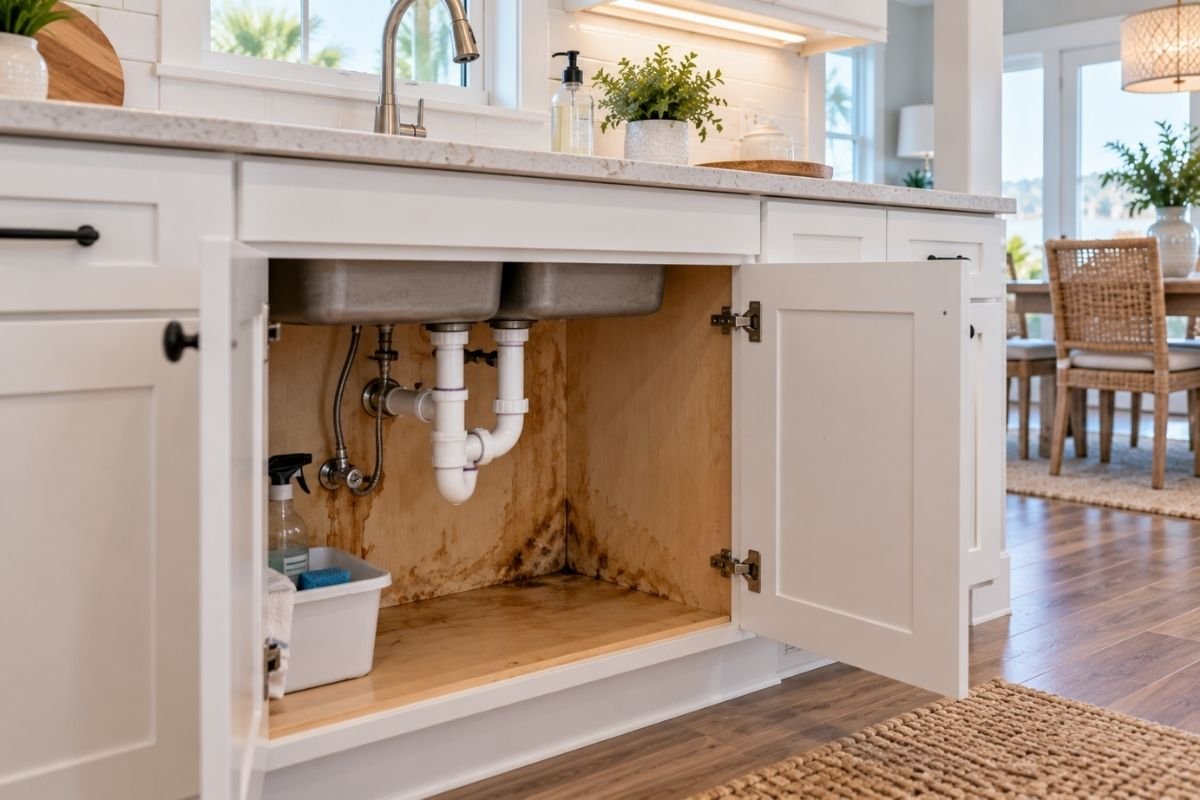
12. Water Marks Inside Cabinets
Cabinets can conceal plumbing leaks for a long time.
Inspect beneath sinks for staining, swelling, dampness, or deteriorated cabinet material.
Also check around supply lines and drain connections.
A small leak can affect nearby walls and flooring if it continues unnoticed.
13. Changes Around a Toilet
Moisture around the base of a toilet should not be ignored.
Look for loose flooring, staining, softness, or recurring dampness.
The source should be identified before repairing nearby finishes.
Repeated moisture can affect materials below the visible floor.
14. Damp Areas Near a Shower or Tub
Bathrooms naturally contain water, but surrounding surfaces should not remain wet because of leaks.
Inspect drywall, trim, flooring, and the opposite side of walls near showers and tubs.
Changes in paint or wall texture can provide an early warning.
Address the source before repainting or patching.
15. Laundry Areas Can Hide Leaks
Washing machines have water supply and drain connections that may be difficult to see.
Inspect the floor and wall behind the appliance when practical.
Look for stains, dampness, corrosion, or damaged material.
A slow leak can remain hidden until surrounding finishes begin to change.
16. Check Around the Water Heater
A water heater and its connections should also be part of a moisture inspection.
Look for water on the floor, staining, corrosion, or other changes around the unit.
Do not ignore recurring moisture.
Have the source evaluated before damage spreads into nearby materials.
17. Inspect Rooms Below Bathrooms
Water does not always become visible in the room where a leak begins.
If a bathroom is located upstairs, inspect the ceiling below it.
New stains or changes in the ceiling finish may indicate a problem above.
Tracing the source is an important part of the repair.
18. Look Around Plumbing Fixtures
Faucets, sinks, toilets, supply valves, and other fixtures can develop leaks over time.
Even a small amount of recurring water can affect cabinets, walls, and floors.
Regularly inspect accessible plumbing connections.
If you notice recurring leaks, learn more about drain and plumbing maintenance for Surf City homes.
19. Watch for Unexplained Changes in Wood Trim
Interior wood trim can respond visibly to moisture.
It may swell, separate, crack, or develop changes in its finish.
Inspect nearby walls and flooring when trim suddenly changes.
The damaged trim may be a symptom rather than the source.
20. Check the Attic After Major Storms
Roof-related water intrusion can begin above the living space.
If the attic is safely accessible, look for staining, wet insulation, or damp roof components.
Use caution around wiring and unstable materials.
Do not climb into an area that appears unsafe.
21. Wet Insulation Can Conceal Moisture
Insulation can hold water inside walls and ceilings.
The finished drywall may not immediately show the full extent of the problem.
This is one reason visual inspection alone cannot always determine whether an area is dry.
A more detailed moisture assessment may be needed.
22. Hidden Water Can Remain Beneath Flooring
Removing visible water does not necessarily remove all moisture.
Water can move between flooring layers or reach the subfloor.
Drying only the visible surface may leave damp materials underneath.
The full affected area should be considered during restoration.
23. Water Can Travel Away From the Original Leak
The place where you see a stain is not always where water entered.
Moisture can follow framing, pipes, or other building components before becoming visible.
That can make leak detection more complicated.
Finding the actual source is essential before repairs begin.
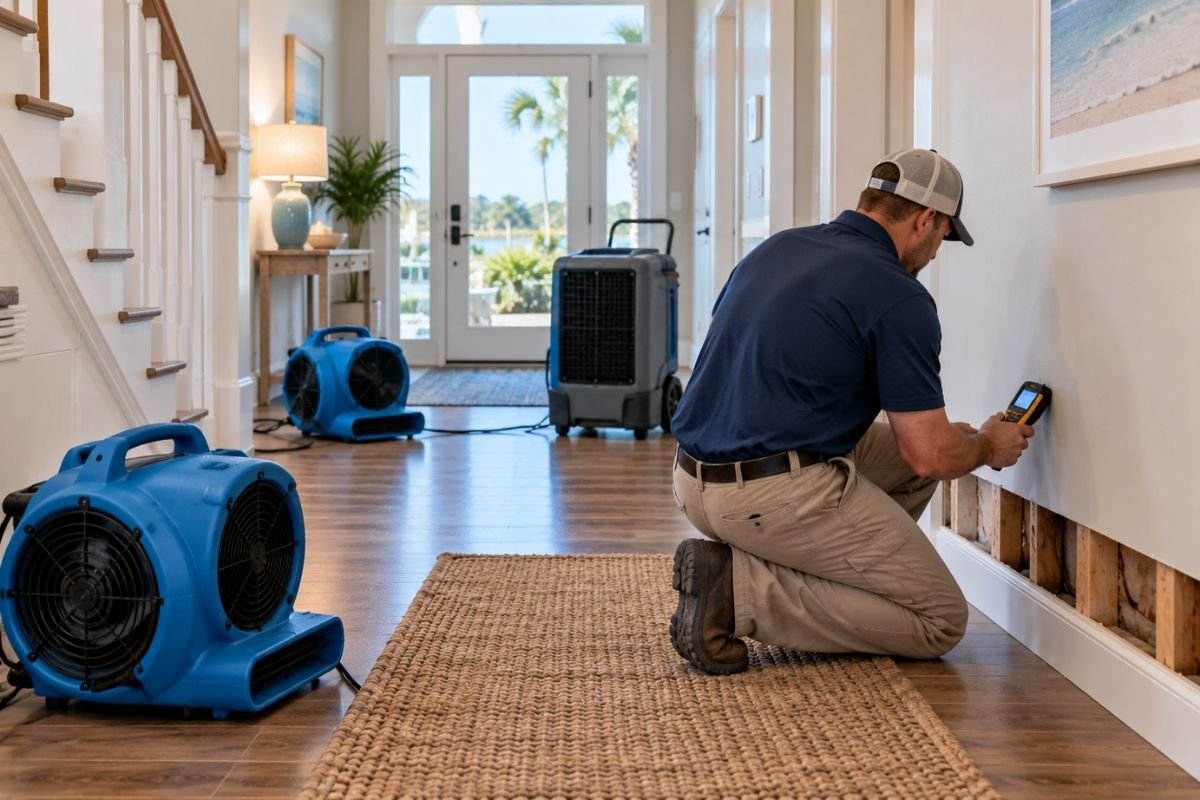
24. Do Not Depend on Touch Alone
A wall can feel dry at the surface while moisture remains inside the assembly.
The same applies to flooring and other porous materials.
Professional restoration work may include moisture measurements to evaluate affected areas.
This can help guide drying and repair decisions.
25. Drying Should Begin Promptly
Once the source is controlled, affected materials should be addressed without unnecessary delay.
Depending on the situation, restoration may involve water extraction, airflow, dehumidification, removal of damaged materials, and moisture monitoring.
The exact process depends on the type and extent of water exposure.
26. Moisture Can Create Conditions for Mold Growth
Controlling moisture is important after any water event.
The U.S. Environmental Protection Agency recommends addressing water and moisture problems promptly and provides additional guidance for mold cleanup and moisture control.
Larger or complicated situations may require professional assessment.
27. Painting Is Not Water Damage Restoration
A stain-blocking primer and new paint may improve appearance after a completed repair.
They should not be used to hide active moisture.
The water source, drying, and material repairs come first.
Painting belongs near the end of the restoration process.
28. Keep an Eye on Repaired Areas
Continue checking the area after restoration is complete.
Pay attention during the next period of heavy rain.
A returning stain, odor, or damp area may indicate that water is still entering the home.
Recurring symptoms should be investigated promptly.
29. Coastal Homes Benefit From Routine Inspections
Surf City homeowners do not need to wait for obvious water damage before inspecting vulnerable areas.
Check windows, doors, plumbing areas, ceilings, and exterior-facing walls periodically.
It is also useful to inspect the home after strong coastal storms.
Small changes are easier to notice when you know what the surfaces normally look like.
30. Treat the Cause, Not Just the Visible Damage
The most important step in water damage restoration is finding why the material became wet.
Replacing drywall or repainting a wall will not prevent another leak.
Control the source first, dry the affected area, and repair damaged materials in the correct order.
This approach helps create a more complete restoration.
Water Damage Restoration for Surf City, NC Homes
Hidden water damage can be easy to miss in a coastal home. A small ceiling stain, swollen baseboard, musty closet, or warped floor may be the first clue that moisture is affecting a larger area.
Surf City homeowners should pay particular attention after heavy rain and coastal storms. Plumbing areas, windows, exterior doors, attics, flooring, and enclosed spaces can all hide moisture.
When water damage is discovered, avoid treating it as a cosmetic problem. Find the source, evaluate the affected materials, complete necessary drying and repairs, and restore the finishes only after the area is ready.
Early attention can help keep a small moisture problem from becoming a much larger home repair.