Many business owners assume radon is primarily a residential concern. However, commercial buildings can also experience elevated radon levels. Since radon is invisible, odorless, and naturally occurring, it can remain undetected unless professional testing is performed. Commercial radon testing helps property owners identify potential indoor air quality concerns and determine whether further action is necessary.
Any commercial building that comes into contact with the ground has the potential to develop elevated radon levels. Offices, schools, healthcare facilities, apartment buildings, retail centers, and many other commercial properties can benefit from professional testing. Understanding which properties face the highest risk can help owners and property managers make informed decisions about building safety.
Why Commercial Radon Testing Is Important
Radon forms naturally when uranium breaks down in soil, rock, and groundwater. As the gas moves upward through the ground, it can enter buildings through foundation cracks, utility penetrations, floor joints, crawl spaces, and other openings.
Once radon enters a building, it may accumulate indoors, particularly in lower-level occupied spaces. Because people often spend long periods inside commercial buildings, testing is an important part of maintaining a healthy indoor environment.
Commercial radon testing provides reliable information about indoor radon levels and helps property owners understand whether mitigation is needed.
Office Buildings
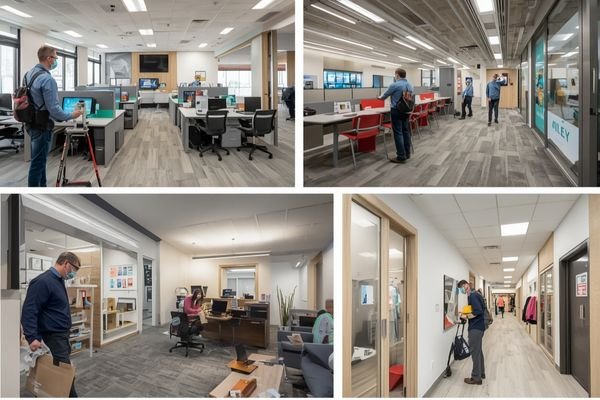
Office buildings are among the most common commercial properties that should consider radon testing. Employees often spend eight or more hours each day inside office environments, making indoor air quality an important concern.
Ground-floor offices, conference rooms, training areas, and lower-level workspaces may be particularly important testing locations. Even modern office buildings can develop elevated radon levels if conditions allow gas to enter from beneath the structure.
Professional testing provides valuable information that helps building owners and managers make informed decisions about indoor environmental quality.
Schools and Educational Facilities
Schools, colleges, universities, and childcare facilities should take radon testing seriously. Students, teachers, administrators, and support staff may spend many hours each day inside educational buildings.
Classrooms, libraries, administrative offices, gymnasiums, and lower-level learning spaces may all benefit from professional testing. Educational facilities often prioritize safety, making radon testing an important part of a comprehensive building management strategy.
Property managers and school administrators can use testing results to evaluate indoor conditions and determine whether additional action is needed.
Healthcare Facilities
Medical offices, clinics, outpatient centers, and healthcare facilities serve patients, staff members, and visitors throughout the day. Maintaining high indoor air quality standards is especially important in these environments.
Healthcare facilities often include lower-level offices, treatment rooms, storage areas, and administrative spaces that may warrant testing. Professional radon testing helps healthcare organizations identify potential concerns and maintain safe indoor conditions.
Testing also demonstrates a commitment to creating healthy environments for both patients and staff.
Apartment Complexes and Multi-Family Properties
Apartment buildings and multi-family housing communities can also benefit from commercial radon testing. Property managers are responsible for maintaining safe living environments for residents.
Ground-level units, basements, maintenance areas, and shared common spaces may be important testing locations. Because tenants spend significant amounts of time inside their homes, testing can provide valuable information about indoor conditions.
If elevated levels are discovered, property owners can evaluate appropriate commercial radon mitigation solutions to address the issue.
Retail Stores and Shopping Centers
Retail stores attract employees and customers throughout the day. Large shopping centers may include multiple tenants, extensive floor space, and varying occupancy levels.
Although customers may spend only a limited amount of time inside a store, employees often work full shifts in the building. Testing can help identify whether elevated radon levels are present and support better indoor air quality management.
Retail property managers often include testing as part of broader building maintenance and safety programs.
Hotels and Hospitality Properties
Hotels, resorts, and hospitality properties serve guests, employees, and visitors year-round. These properties often include guest rooms, conference facilities, restaurants, fitness centers, and administrative offices.
Professional testing helps hospitality businesses evaluate indoor environmental conditions and maintain safe accommodations for guests. Testing may be particularly useful in ground-level guest rooms and frequently occupied staff areas.
Maintaining healthy indoor environments can support guest satisfaction and overall property management goals.
Warehouses and Industrial Buildings
Warehouses and industrial facilities may not always receive the same attention as office buildings when it comes to indoor air quality. However, employees often spend long periods working inside these structures.
Warehouse offices, break rooms, maintenance shops, and administrative spaces may benefit from professional testing. Large floor slabs and extensive ground contact can create opportunities for radon entry in some facilities.
Testing provides building owners with useful information about indoor conditions and potential areas of concern.
Government Buildings
Government facilities frequently serve both employees and members of the public. Municipal offices, administrative buildings, community centers, and public service facilities often experience significant daily occupancy.
Because these buildings support public services, maintaining healthy indoor environments is especially important. Professional radon testing can help facility managers evaluate building conditions and make informed maintenance decisions.
Testing may also support broader safety and risk management initiatives.
Mixed-Use Developments
Mixed-use properties combine residential, commercial, office, and retail functions within the same development. These buildings often have complex layouts and varying occupancy patterns.
Professional testing helps identify conditions across different sections of the property. Because multiple occupant groups use these buildings, understanding indoor air quality conditions becomes even more important.
Testing provides a foundation for effective building management and long-term maintenance planning.
Why Professional Testing Matters
Commercial buildings are often more complex than residential structures. Multiple floors, large footprints, varying occupancy patterns, and different foundation designs require careful evaluation.
Professional testing helps ensure accurate equipment placement, reliable data collection, and proper interpretation of results. Instead of relying on assumptions, property owners receive factual information about their building’s indoor environment.
This information helps guide future decisions regarding maintenance, monitoring, and mitigation.
Using Reliable Radon Resources
Property owners should rely on trusted educational resources when learning about radon. The EPA provides information about radon in schools, which also offers useful insight into radon testing and indoor air quality management in occupied buildings.
Combining professional testing with trusted information helps property owners make informed decisions that support occupant safety.
Final Thoughts
Many different types of commercial properties can benefit from professional radon testing. Office buildings, schools, healthcare facilities, apartment complexes, retail centers, hotels, warehouses, government buildings, and mixed-use developments all have the potential to experience elevated radon levels.
Because radon cannot be detected without testing, proactive evaluation is essential. Commercial radon testing helps property owners identify hidden concerns, support indoor air quality, and make informed decisions about building maintenance and occupant safety.
For North Carolina property owners and managers, regular radon testing remains one of the most effective ways to better understand indoor environmental conditions and protect the people who use their buildings every day.