Custom Outdoor Kitchen Ideas for Coastal North Carolina Homes
Coastal North Carolina offers plenty of opportunities to enjoy life outdoors. From relaxed family dinners to weekend gatherings with friends, a thoughtfully designed outdoor kitchen can turn an ordinary backyard into a practical extension of the home.
The advantage of a custom outdoor kitchen is that it does not have to follow a standard layout. Homeowners can choose the cooking features, storage, seating, materials, and overall design that best fit their property and the way they spend time outside.
For homes near the North Carolina coast, however, good design should also account for humidity, rain, sunlight, wind, and salt in the air. Here are several outdoor kitchen ideas that combine style, convenience, and coastal practicality.
1. Create an L-Shaped Outdoor Kitchen
An L-shaped layout can provide a useful balance between cooking space and entertaining space.
One side can contain the grill and appliances while the other provides additional countertop space or bar seating. This arrangement can help keep guests close to the activity without placing them directly in the primary cooking zone.
It can work particularly well on larger patios where homeowners want the kitchen to help define a separate outdoor entertaining area.
2. Keep It Simple With a Linear Kitchen
A custom outdoor kitchen does not need to be large to be useful.
For smaller patios, decks, and backyards, a single-wall or linear layout can provide the essentials without taking over the entire outdoor area. A grill, preparation counter, storage, and compact refrigerator can all be incorporated into one organized section.
This design can also leave more room for dining, landscaping, or lounge furniture.
3. Add a Large Island for Entertaining
An island can become the social center of an outdoor kitchen.
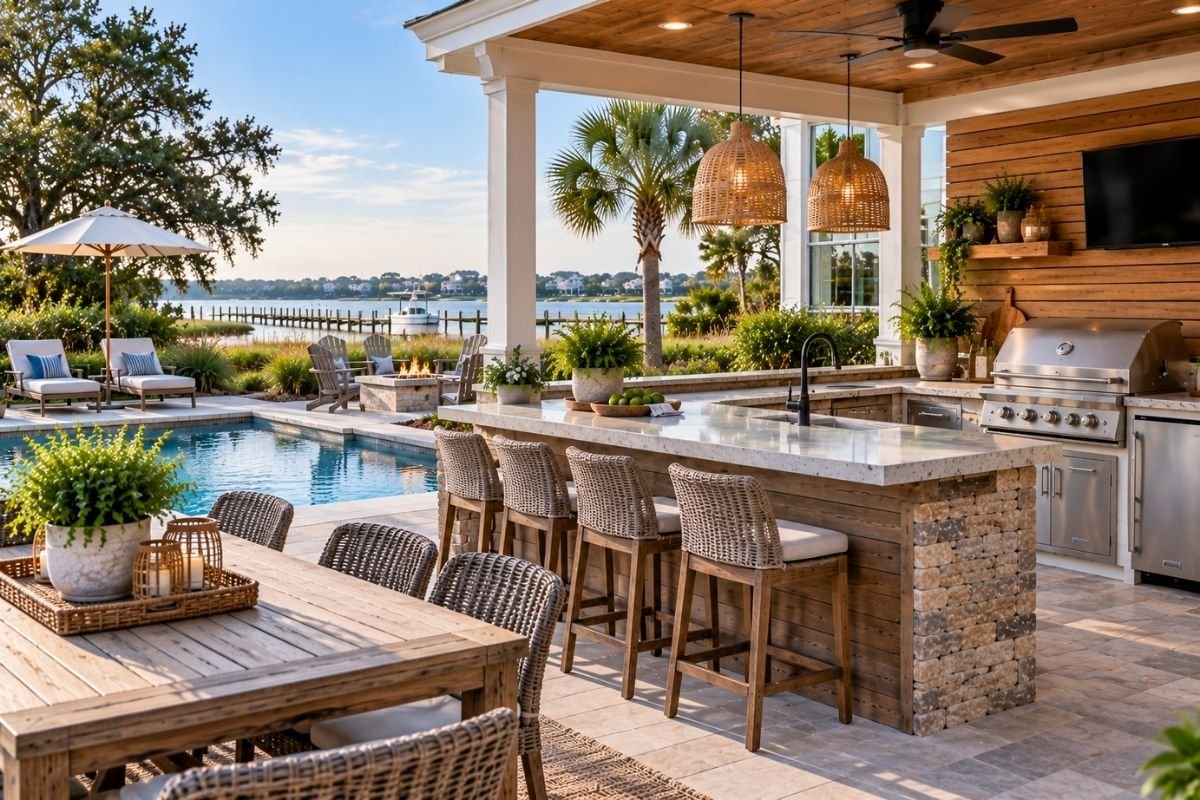
It can provide additional preparation space while also creating a place for guests to sit, eat, or talk with the person cooking. Depending on the layout, an island may also accommodate a sink, refrigerator, storage, or other useful features.
When designing an island, homeowners should leave enough clearance around it for comfortable movement and access to appliances and cabinets.
4. Incorporate a Built-In Grill Station
A built-in grill creates a more permanent and integrated appearance than a freestanding unit.
The grill can be surrounded by countertops for preparation and serving, with storage positioned underneath for frequently used cooking tools.
For coastal properties, appliances and surrounding materials should be selected for outdoor exposure. Regular cleaning is also important because moisture and salt in the air can contribute to corrosion over time.
5. Add a Pizza Oven or Specialty Cooking Area
Homeowners who enjoy experimenting with outdoor cooking may want more than a traditional grill.
A pizza oven, smoker, griddle, or side burner can create additional cooking options and give the outdoor kitchen a more personalized feel.
Specialty cooking equipment should be planned from the beginning so there is appropriate space, ventilation, heat protection, and access to any required utilities.
6. Design a Coastal-Inspired Kitchen
An outdoor kitchen can complement the architecture and surroundings of a coastal North Carolina home without relying on an overly themed design.
Light-colored stone, neutral countertops, natural wood accents, simple cabinetry, and subtle coastal textures can create a relaxed appearance that works well with patios, decks, and waterfront properties.
The materials selected should still be appropriate for outdoor conditions. Durability and maintenance requirements are just as important as appearance.
7. Include a Dedicated Beverage Station
A beverage area can be particularly useful when entertaining.
An outdoor-rated refrigerator, beverage cooler, ice storage, or small serving counter can allow guests to access drinks without entering the main cooking area.
Separating the beverage area from the grill can also reduce traffic around the person preparing food.
8. Combine Cooking and Dining Under a Pergola
A pergola can help visually connect an outdoor kitchen and dining area while providing partial shade.
It can also create a defined outdoor room that feels more connected to the rest of the home. Lighting and ceiling fans may be incorporated where appropriate to make the area more comfortable during evening gatherings and warmer weather.
When grills or other heat-producing appliances are positioned beneath or close to an overhead structure, proper clearances, ventilation, and applicable safety requirements need to be considered.
9. Create Separate Cooking and Social Zones
One of the most useful customization ideas is separating the working portion of the kitchen from the main gathering area.
The grill, sink, preparation surfaces, and storage can form a dedicated cooking zone, while bar seating, a dining table, or lounge furniture creates a nearby social zone.
This arrangement can make the backyard easier to navigate during larger gatherings and reduce congestion around hot cooking equipment.
10. Add Storage That Fits Your Needs
Storage should be designed around what homeowners actually plan to keep outside.
Drawers can provide quick access to grilling tools, while cabinets may accommodate serving accessories and cleaning supplies. A concealed trash and recycling area can help keep countertops clear while entertaining.
Outdoor cabinetry should be selected specifically for exterior conditions, particularly in areas where humidity and moisture are common.
11. Make Lighting Part of the Design
Lighting can completely change how an outdoor kitchen feels after sunset.
Task lighting around the grill, sink, and countertops improves visibility while preparing food. Pendant lights above an island can provide both practical illumination and visual interest, while softer lighting around seating and landscaping can create a relaxed atmosphere.
Including lighting in the original design also makes it easier to plan electrical connections appropriately.
12. Consider a Covered Outdoor Kitchen
A covered kitchen may provide additional protection from direct sunlight and rain while making the outdoor area more comfortable during different weather conditions.
The cover might be connected to the home or incorporated into a separate pavilion or outdoor structure, depending on the property.
Any covered cooking area should be carefully designed to provide appropriate ventilation and clearance around grills and other appliances.
13. Use Durable Countertops and Surfaces
Outdoor countertops experience conditions that indoor surfaces do not. They may be exposed to strong sunlight, moisture, temperature changes, food spills, and regular cleaning.
Homeowners should select surfaces intended for outdoor use and consider how much weather exposure the kitchen will receive.
The same principle applies to flooring. Patio surfaces should be durable, relatively easy to maintain, and suitable for areas where food preparation and outdoor foot traffic occur.
14. Plan for Coastal Weather
A custom kitchen near the coast should be designed around its environment rather than simply adapting an indoor kitchen concept for outdoor use.
Salt air and moisture can affect metals, hardware, and appliances. Wind can influence grill placement, while heavy rain makes drainage particularly important.
Homeowners should consider how exposed the kitchen will be throughout the year and select materials, equipment, and construction methods accordingly.
The National Weather Service provides hurricane and severe-weather preparedness information that coastal homeowners can use when planning how to protect their properties and outdoor areas.
15. Connect the Kitchen With the Rest of the Backyard
A custom outdoor kitchen works best when it feels connected to the entire property.
Rather than designing the kitchen independently, consider how it relates to existing patios, decks, gardens, pools, porches, walkways, and seating areas.
Repeating materials or architectural details from the home can help the new space feel intentional. Landscaping can then soften the edges of the kitchen and connect it visually with the surrounding yard.
Choose Features You’ll Actually Use
It can be tempting to include every available outdoor appliance, but more features do not automatically create a better kitchen.
Think about your normal cooking habits first. If grilling is the priority, generous preparation space around a quality grill may be more valuable than several specialty appliances. If you frequently entertain, seating, refrigeration, storage, and serving space may deserve greater attention.
A customized design allows the available space and budget to be directed toward features that will genuinely improve how the backyard is used.
Plan Utilities and Drainage Early
If your design includes electricity, water, drainage, or fuel connections, these elements should be planned before cabinetry, countertops, and finished surfaces are installed.
Early planning can help create cleaner installations and reduce the likelihood that completed portions of the kitchen will need to be modified later.
Drainage around the entire outdoor area should also be considered so rainwater does not routinely collect around appliances, cabinetry, electrical components, or seating areas.
Bring Your Outdoor Kitchen Ideas Together
Every coastal North Carolina property is different. Available space, exposure to weather, existing structures, views, entertaining habits, and budget can all influence which outdoor kitchen design makes the most sense.
Atlantic Coastal Solutions provides property improvement, repair, maintenance, and customization services throughout coastal North Carolina. Homeowners considering an outdoor living project can explore the company’s home and property services for more information.
Create an Outdoor Kitchen That Feels Like Part of Your Home
A custom outdoor kitchen gives homeowners the flexibility to create a space around their own lifestyle instead of adapting to a one-size-fits-all design.
From compact grill stations and L-shaped kitchens to covered entertaining areas and large islands, there are many ways to make outdoor cooking more convenient and enjoyable.
For coastal North Carolina homes, the strongest designs combine those lifestyle features with practical decisions about weather exposure, materials, drainage, utilities, and long-term maintenance.
With thoughtful planning, an outdoor kitchen can become a natural extension of your home and a comfortable place to enjoy coastal living with family and friends.