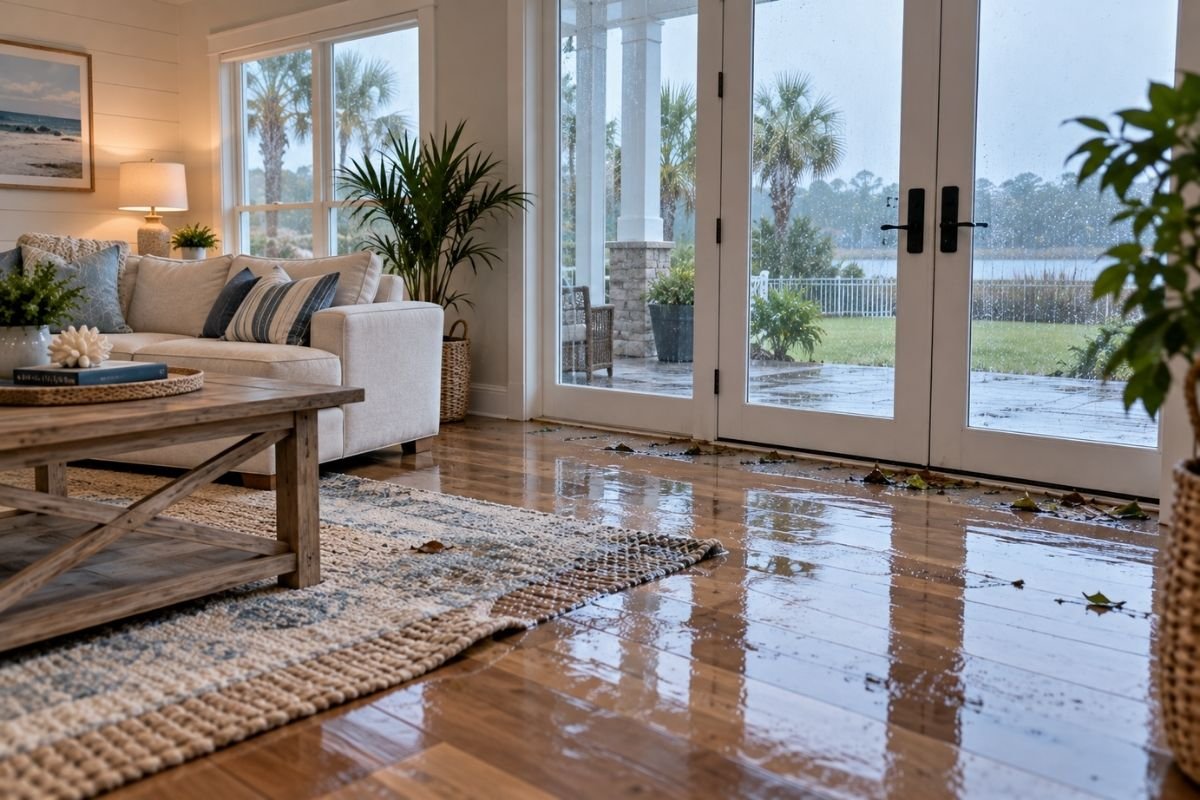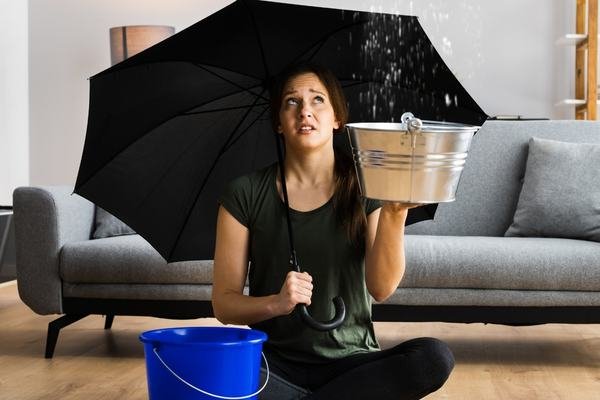
Water damage is one of the most common problems homeowners face in coastal North Carolina. Homes in Hampstead, Wilmington, Surf City, Topsail Beach, and Wrightsville Beach regularly deal with storms, heavy rain, and high humidity. Because of these conditions, even a small leak can quickly turn into a serious issue.
At first, water damage may seem minor. For example, you might notice a small stain on the ceiling or a damp area on the floor. However, water often spreads behind walls, under flooring, and into structural materials. As a result, problems can continue long after surfaces appear dry.
For this reason, professional water damage restoration plays an important role in protecting homes. Proper restoration removes hidden moisture, repairs damage, and helps prevent long-term structural issues.
Why This Service Matters
Water damage restoration does much more than remove visible water. Instead, the goal is to completely dry affected areas and repair materials before larger problems develop.
In coastal communities such as Wilmington and Surf City, moisture levels already remain high throughout much of the year. Because of this, trapped moisture can lead to mold growth, wood rot, and structural deterioration.
In addition, untreated water damage can affect indoor air quality. Mold spores and damp materials can circulate through a home and create health concerns for occupants.
Therefore, professional restoration services help homeowners protect both their property and their health. By addressing moisture early, homeowners can avoid costly repairs later.
Common Signs You May Need This Service
Water damage sometimes occurs suddenly after a storm or plumbing failure. However, in many cases the signs develop gradually. Because of this, homeowners should pay attention to several common warning signs.
Water Stains on Walls or Ceilings
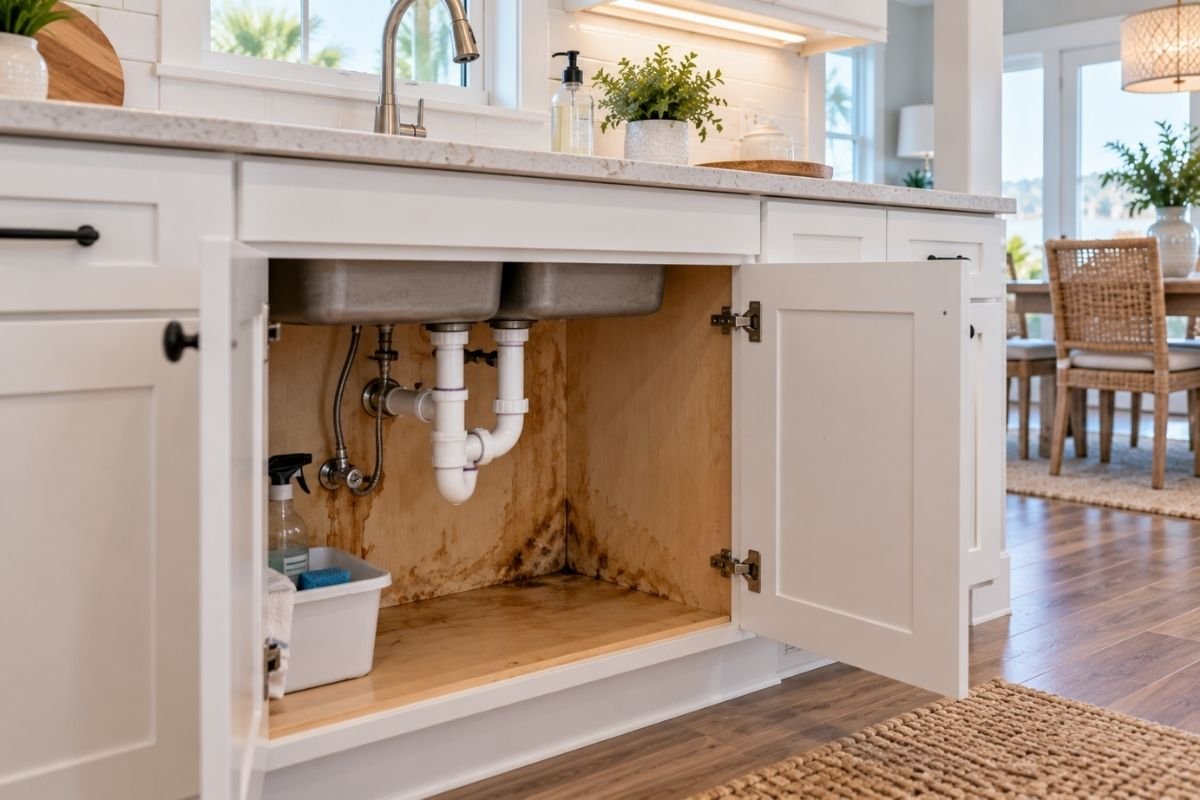
First, discoloration on ceilings or walls often indicates water intrusion. Brown or yellow stains usually appear after moisture seeps into drywall. Over time, these stains may grow larger if the source of the water continues.
Peeling Paint or Bubbling Drywall
Next, moisture behind walls often causes paint to peel or drywall to bubble. This issue commonly appears around windows, ceilings, or plumbing areas.
Musty Odors Inside the Home
Another sign is a persistent damp smell. In many homes, hidden moisture creates a musty odor even when no water is visible. Therefore, unusual smells should not be ignored.
Warped or Buckling Floors
Water beneath flooring can cause materials to expand and shift. As a result, hardwood floors may cup or swell, while laminate flooring may lift or separate.
High Indoor Humidity
Finally, unusual humidity inside the home may signal moisture problems in crawlspaces, insulation, or structural framing.
Benefits of Hiring a Professional
Many homeowners attempt to dry water damage on their own. However, professional restoration offers several clear advantages.
Accurate Moisture Detection
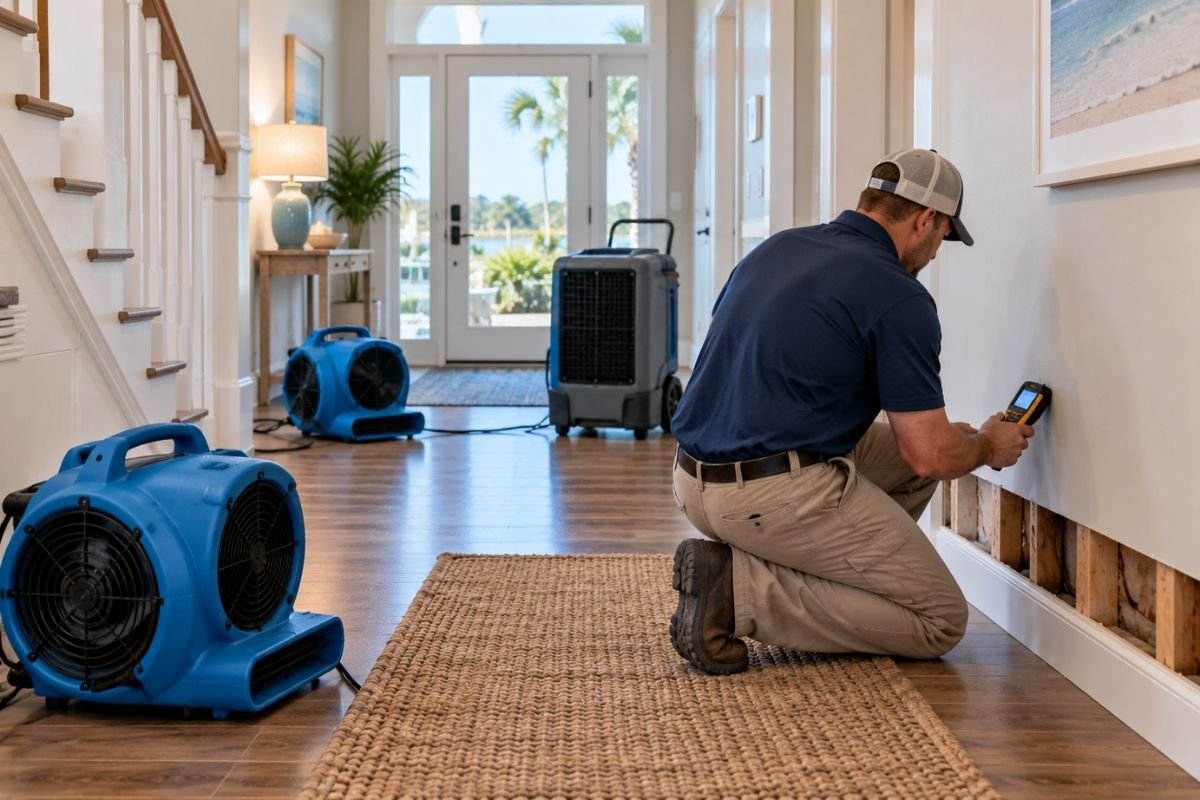
First, restoration professionals use specialized equipment such as moisture meters and thermal imaging cameras. As a result, they can locate hidden moisture that may remain inside walls or under flooring.
Faster Drying
In addition, professionals use powerful air movers and commercial dehumidifiers. These systems remove moisture much faster than household equipment.
Mold Prevention
Furthermore, quick and thorough drying reduces the risk of mold growth. In humid coastal environments, mold can begin forming within 24 to 48 hours after water exposure.
Proper Repairs
Professional restoration teams can also repair damaged drywall, flooring, and insulation. Because of this, homeowners receive a complete solution instead of a temporary fix.
Long-Term Protection
Most importantly, professional restoration helps prevent future moisture issues. Proper drying and repairs reduce the chance of recurring damage.
What the Process Typically Involves
Water damage restoration follows a structured process designed to restore the home safely and efficiently.
Inspection and Damage Assessment
First, technicians perform a detailed inspection. During this step, they identify the source of the water and determine how far it has spread.
Water Extraction
Next, professionals remove standing water using powerful pumps and extraction equipment. Quick removal helps limit additional damage.
Drying and Dehumidification
After water removal, technicians begin the drying process. High-capacity air movers and dehumidifiers remove moisture from structural materials.
Moisture Monitoring
Throughout the drying stage, technicians regularly check moisture levels. This step ensures that walls, floors, and framing dry completely.
Removal of Damaged Materials
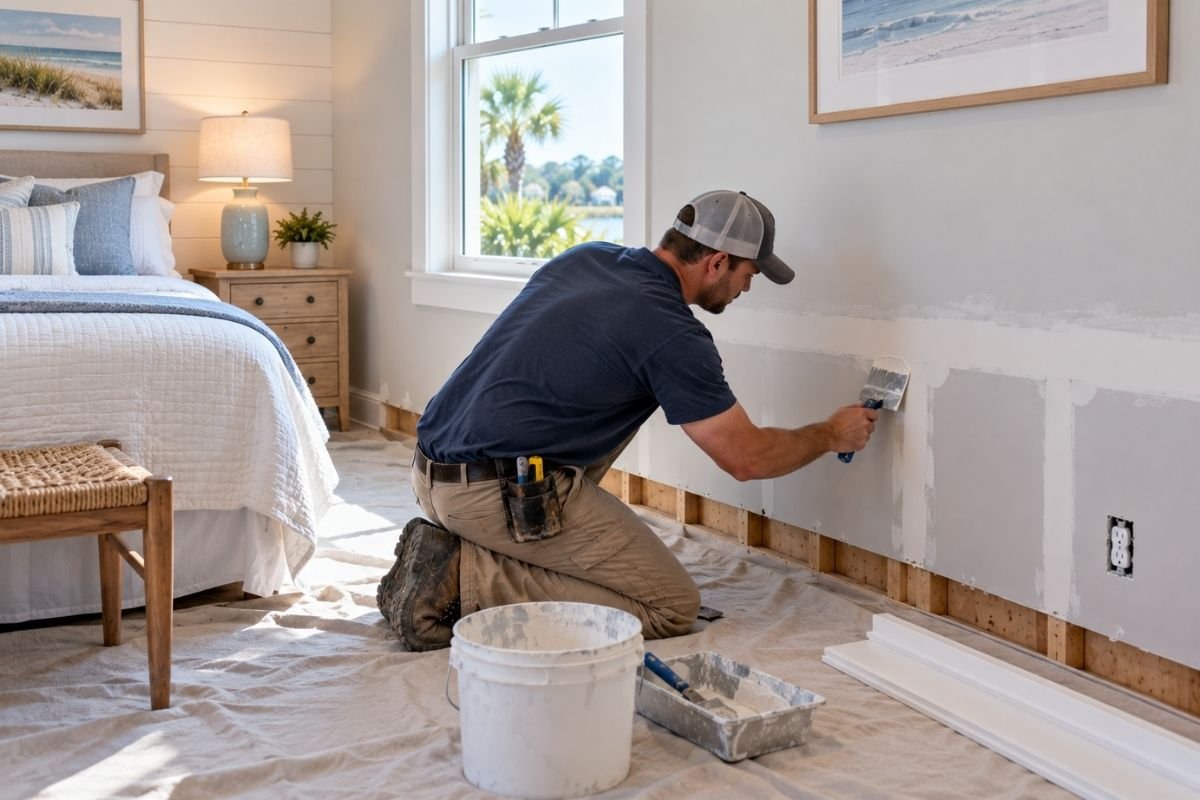
If materials cannot be restored, technicians remove them. For example, heavily saturated drywall or insulation may need replacement.
Repairs and Final Restoration
Finally, restoration professionals repair or replace damaged materials. At this point, the home returns to its original condition.
Why This Matters in Hampstead, Wilmington, Surf City, Topsail Beach, and Wrightsville Beach
Coastal North Carolina presents several environmental challenges for homeowners. As a result, water damage restoration becomes especially important in this region.
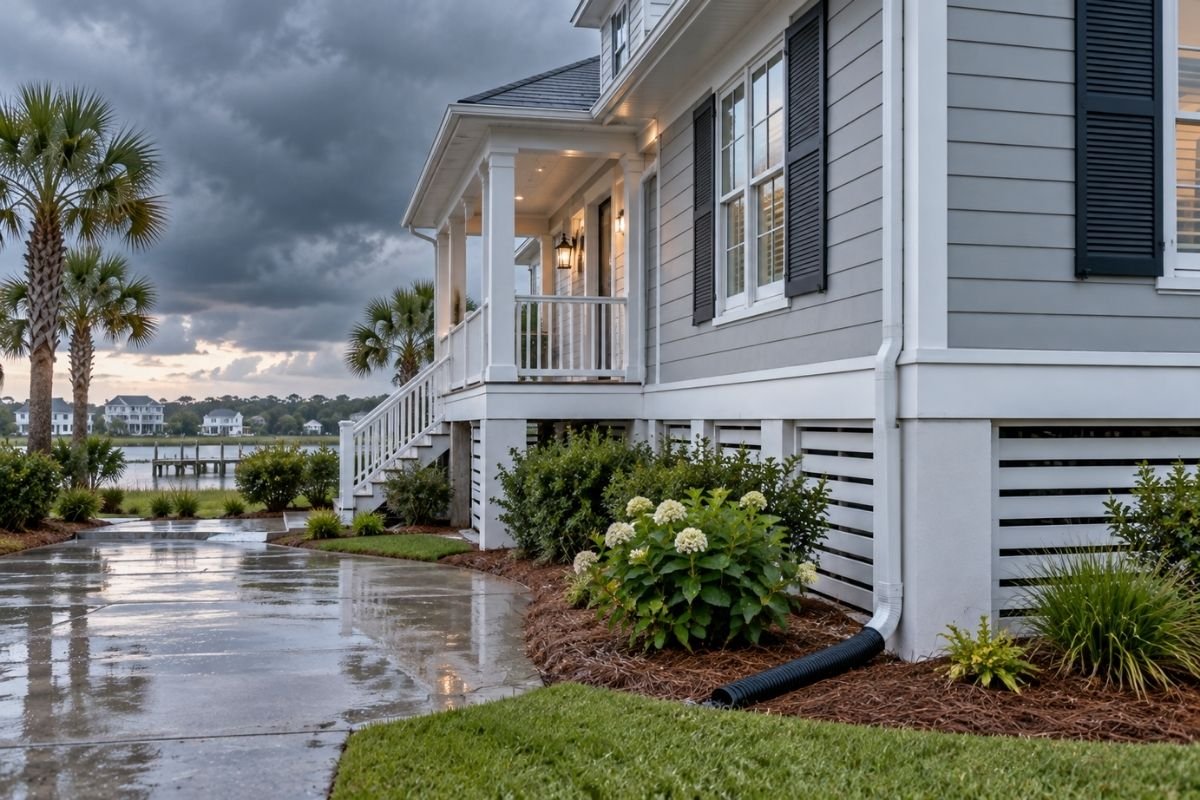
First, storms frequently affect areas like Wilmington and Wrightsville Beach. Hurricanes and tropical systems can cause flooding, roof leaks, and water intrusion.
In addition, coastal humidity slows the natural drying process. Because of this, moisture can remain trapped inside building materials for long periods.
Salt air also contributes to faster deterioration of certain materials after water exposure. Therefore, prompt restoration helps prevent additional damage.
Many homes in Surf City and Topsail Beach also include crawlspaces. When water enters these spaces, it can affect flooring, insulation, and indoor air quality throughout the home.
For these reasons, professional restoration services remain especially valuable for coastal homeowners.
When to Schedule Service
Homeowners should schedule water damage restoration as soon as possible after any water event.
For example, restoration may be necessary after:
• Burst pipes
• Roof leaks after storms
• Appliance failures
• Flooding from heavy rain
• Plumbing leaks
• Crawlspace water intrusion
Even if surfaces appear dry, hidden moisture may remain. Therefore, a professional inspection can help identify issues before they grow worse.
Additionally, homeowners in Hampstead, Wilmington, Surf City, Topsail Beach, and Wrightsville Beach should consider inspections after major storms. Early detection often prevents expensive repairs later.
Conclusion
Water damage can quickly lead to serious structural problems if it is not addressed properly. In coastal North Carolina, storms, humidity, and salt air create additional risks for homeowners.
Professional water damage restoration removes hidden moisture, prevents mold growth, and restores damaged materials. As a result, homeowners can protect both their property and their indoor environment.
For homes in Hampstead, Wilmington, Surf City, Topsail Beach, and Wrightsville Beach, fast action and professional restoration provide the best protection against long-term damage.